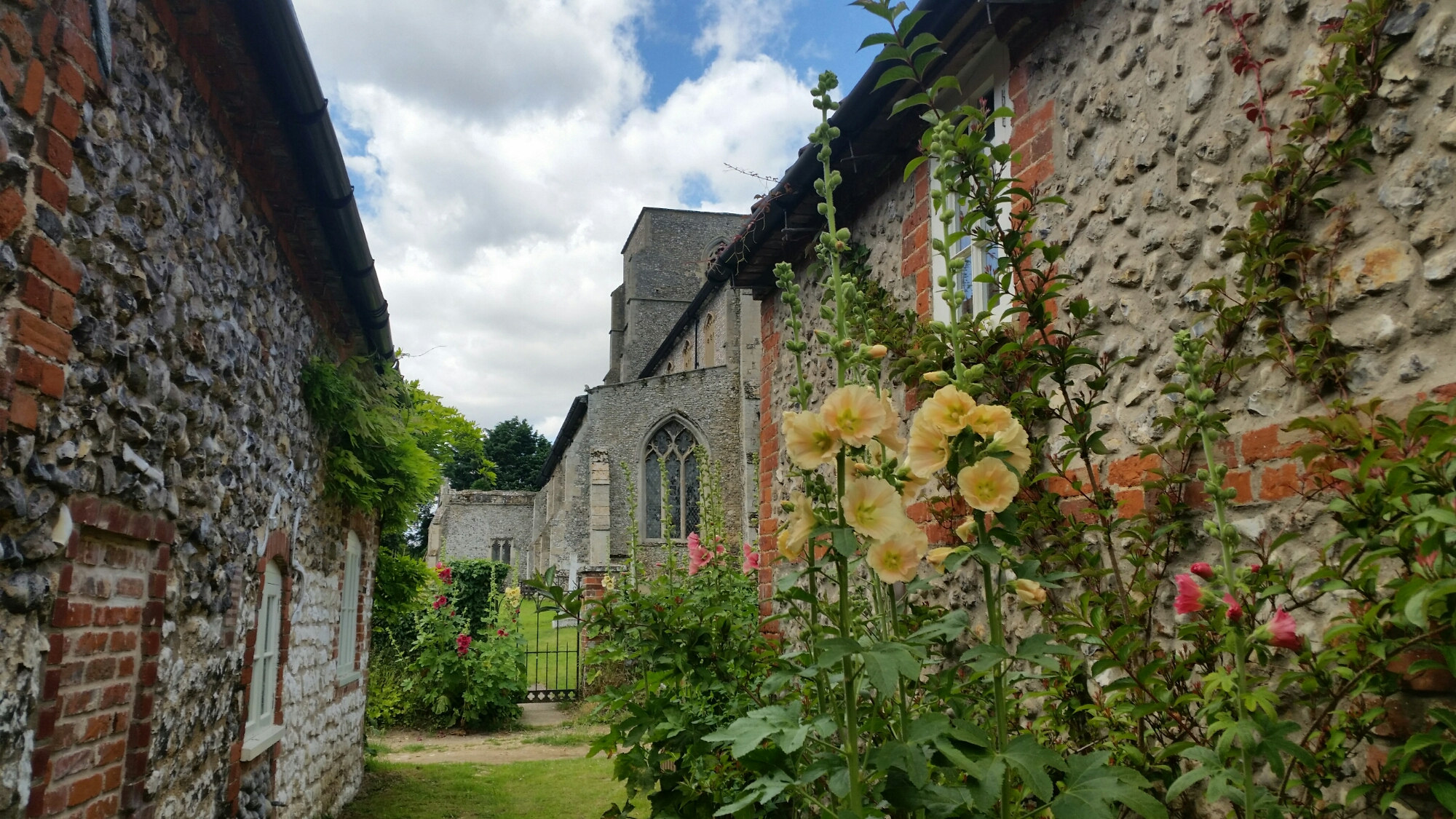
Noon struck as we arrived at South Creake church, surrounded by cottages with spectacular hollyhocks:-
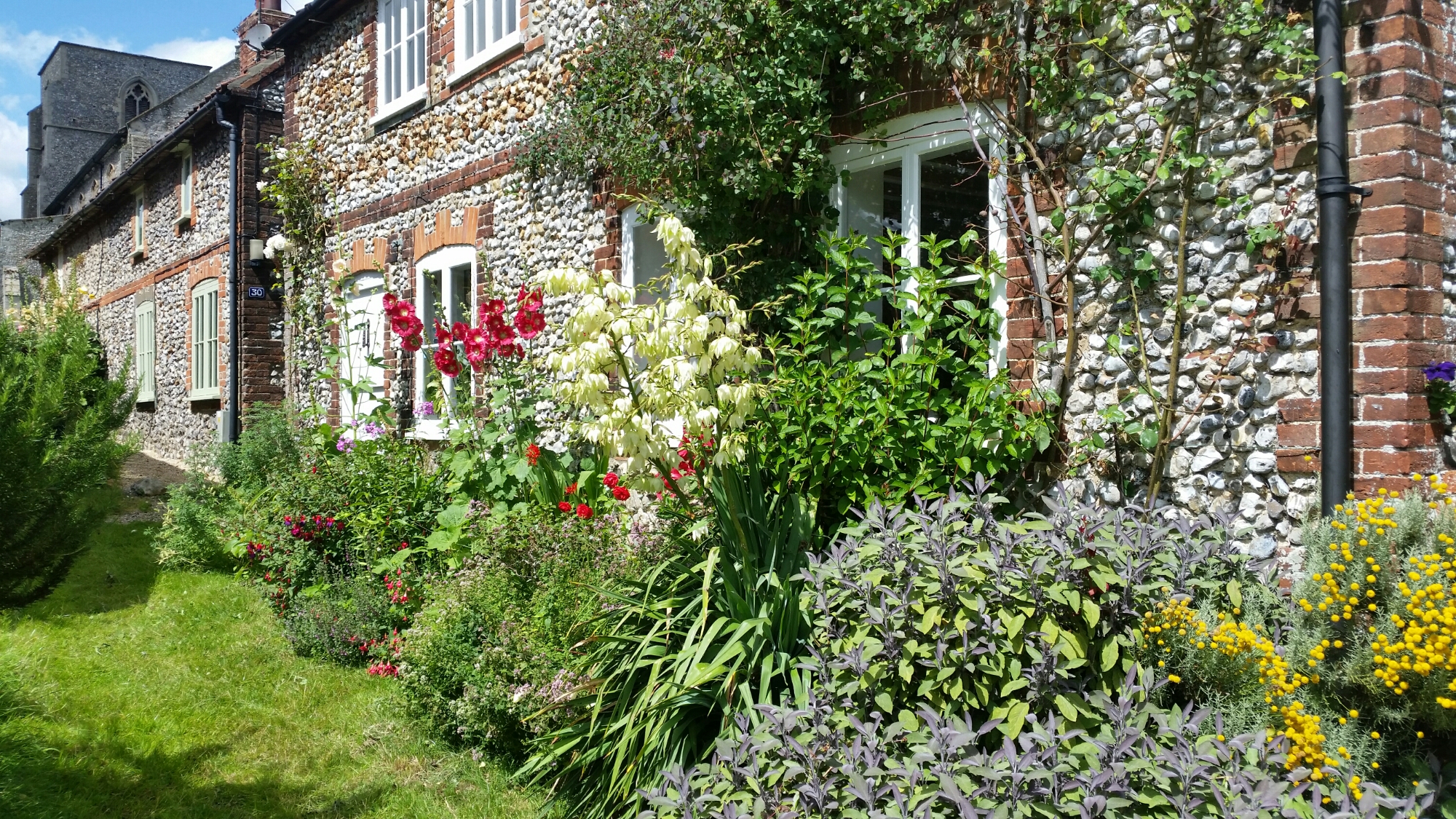
Noon struck as we arrived at South Creake church, surrounded by cottages with spectacular hollyhocks:-
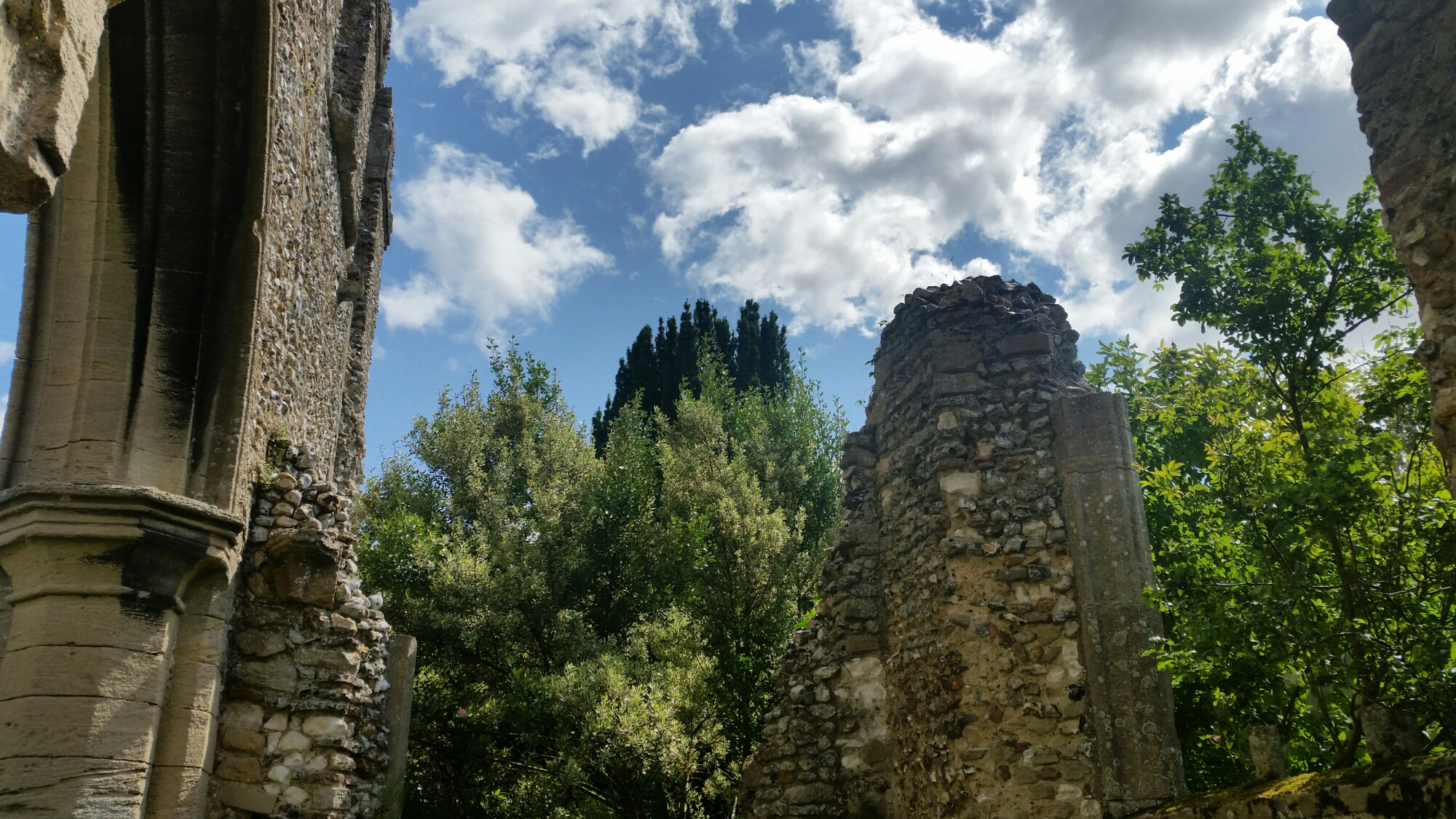
We started our Norfolk tour at Creake Abbey, originally St. Mary of the Meadows, an Augustinian priory founded in 1227 by Sir Robert de Nerford. There was a fire in 1484 and the Abbey was dissolved after a plague in 1506, but it has reasonably well-preserved monastic remains:-

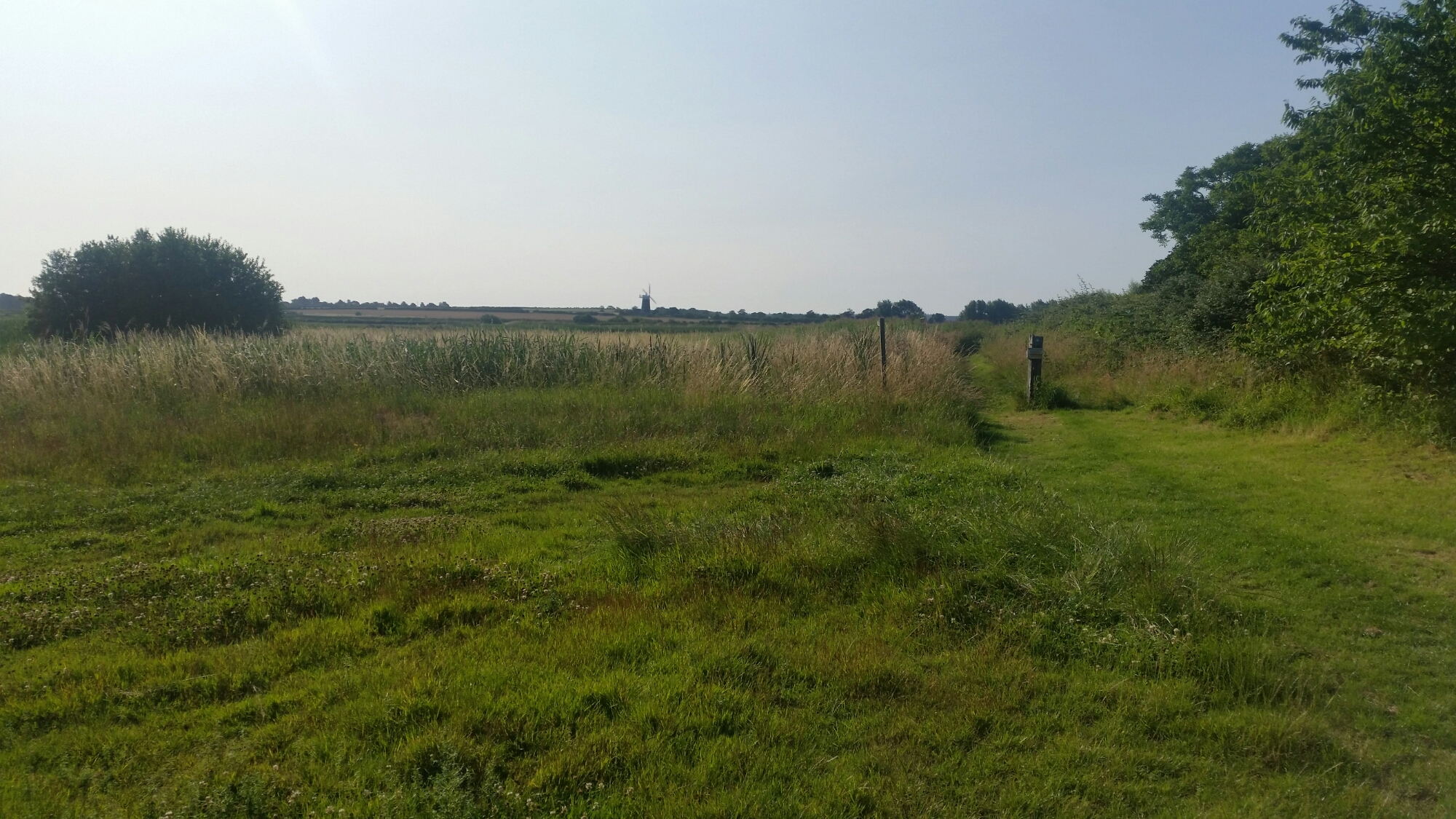
I went for a quick early morning constitutional across the fields and marshes towards the sea with the boats and harbour of Burnham Overy Staithe in the distance:-

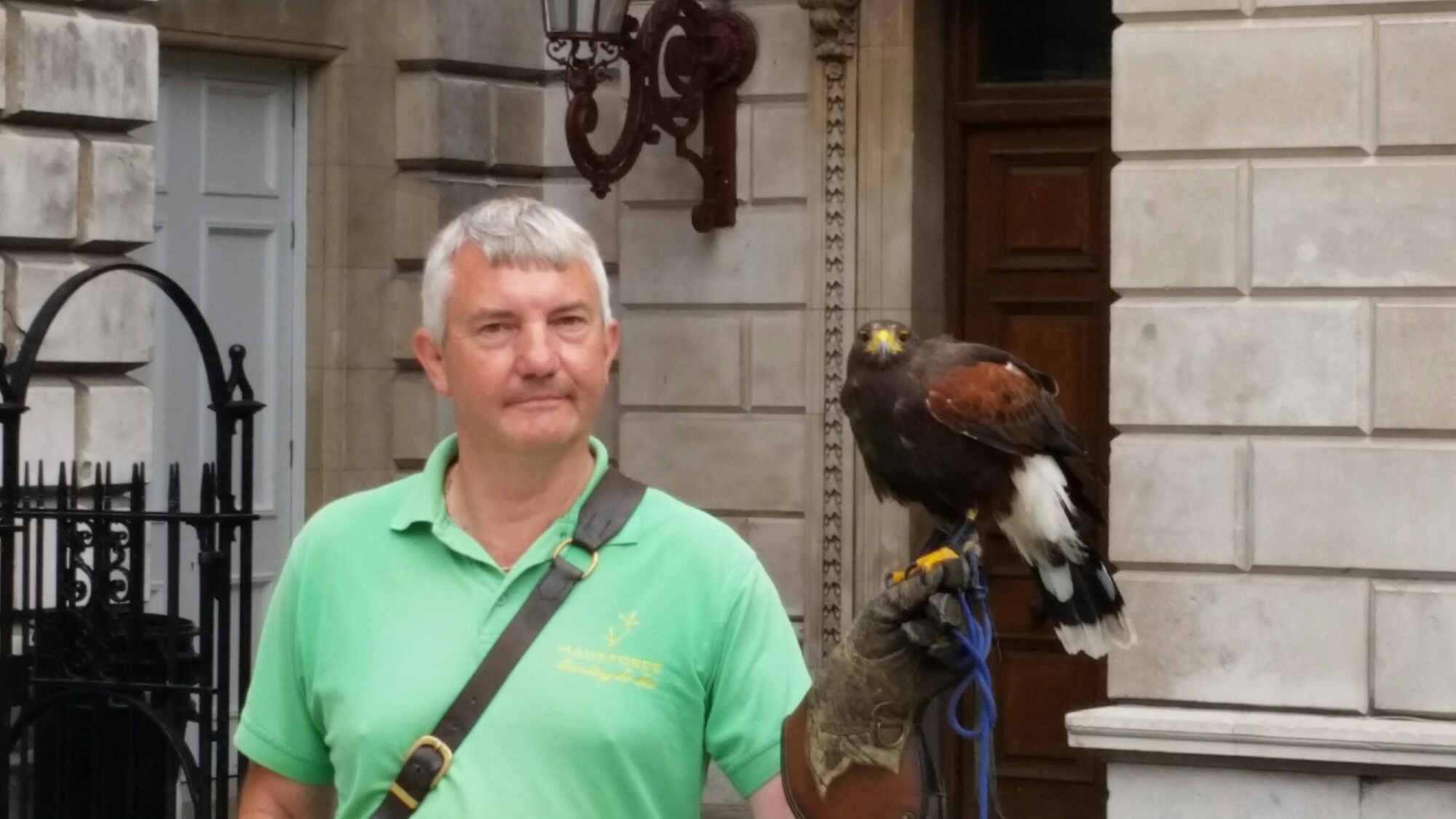
I was in early to greet visitors from the US. I was pleased to meet the man with a hawk who comes to clear the courtyard of pigeons:-
We have subscribed to a magazine called Cereal. The first two issues have appeared (vols. 4 and 6 as the others are apparently out of print). It’s a magazine devoted to beautiful photography of places one might not be able to visit, ecological in intent, about trees and crops, in one issue covering the Brecon Beacon, Vancouver and Singapore, like a National Geographic for the new century. It’s interesting for the quality of its production and the fact that as most print media declines, it’s still possible to produce a magazine so purely aesthetic.
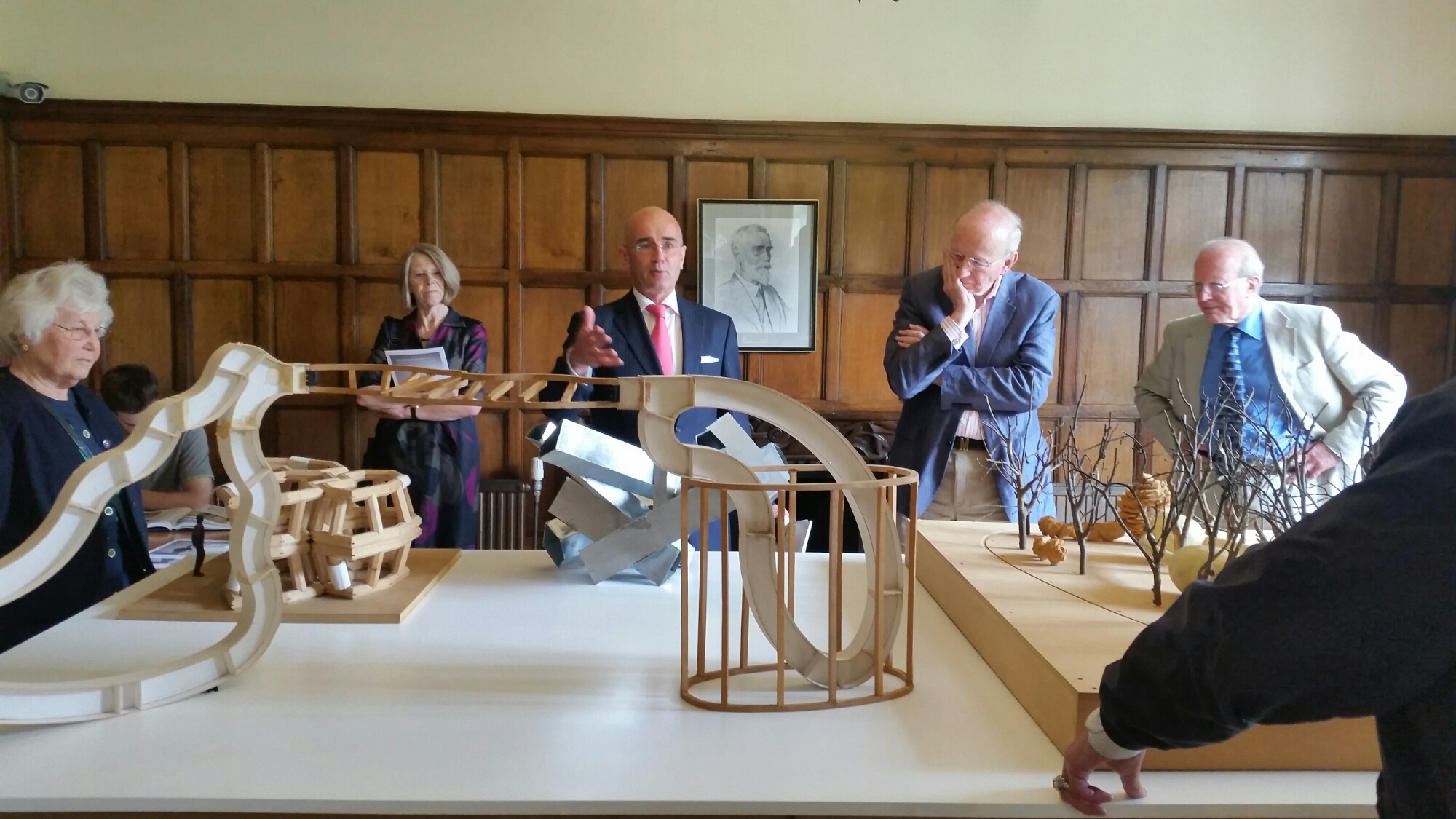
Professor Phillip Lindley of the University of Leicester and a great expert on medieval sculpture took us round the small and very select exhibition of Richard Deacon’s models and maquettes which have been installed in the Old Combination Room of Wolfson College, an unusual setting for such a fine and fascinating display of his thinking, but none the worse for that:

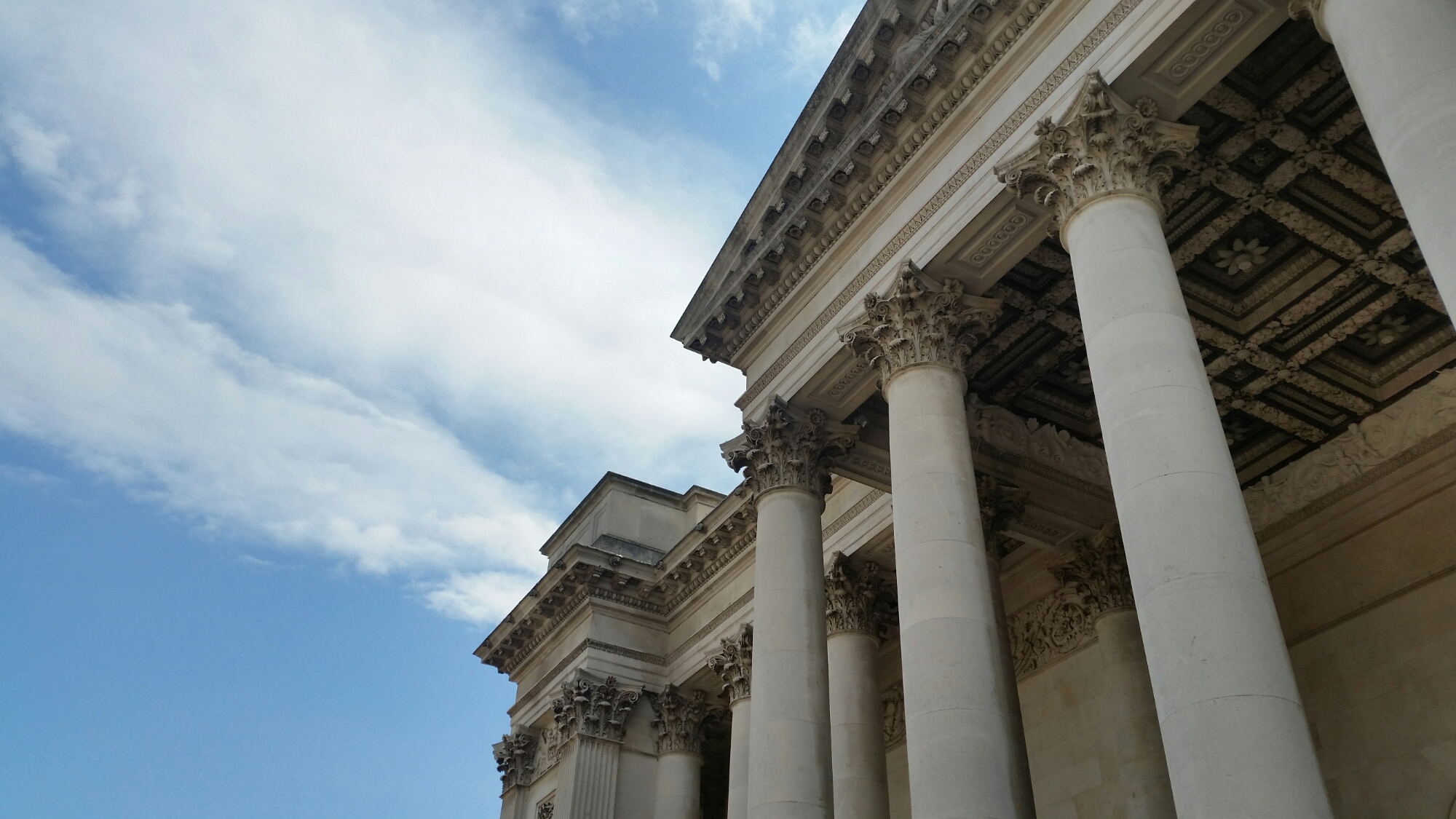
A lovely afternoon in the Fitzwilliam Museum with the RA’s Patrons being taken round by Tim Knox. We began in the entrance portico which has been newly refurbished in honour of the Museum’s forthcoming 200th. birthday next year and before, as Tim said, one of the lotus leaves fell on a French schoolchild:-

Some time ago, I was on a version of Any Questions with Yancey Strickler, the young and very impressive co-founder and now CEO of Kickstarter, the organisation which arranged and leads crowdfunding campaigns, based in Brooklyn NY. At the time, we were having difficulties getting funding for our major Ai Weiwei exhibition this September and Yancey generously suggested that Kickstarter might be able to help. The campaign was launched this morning with a target of £100,000 to pay for an installation in the courtyard.
I have been digesting last night’s Annual Architecture lecture at the RA which was given by Bjarke Ingels, who showed a rapid-fire succession of projects in major cities throughout the world, including Copenhagen, Vancouver and New York, all of which are more radically disruptive of the conventional geometries of building, more grandly and ostentatiously scenographic, than the work of Frank Gehry. Trained as a cartoonist at the Royal Danish Academy of Fine Arts and then as an architect in Barcelona, he worked first for Rem Koolhaas. Both VIA, his apartment block in New York, and his recently announced building to replace one by Norman Foster on the World Trade essentially change the language of architecture, such that it belongs more to the world of Archigram and Lingotto than it does to Le Corbusier and Mies van der Rohe.
Jeremy Dixon introduced me to the great wooden pergola in the grounds of The Hill, Hampstead in order to show the source of the carved woodwork detailing in the roof of Clifton Nursery in Little Venice. I had no idea that lurking just behind Raymond Erith’s reconstruction of Jack Straw’s Castle is a vast Edwardian house, designed in 1895 and bought by the first Lord Leverhulme in 1904 (the previous owner moved to Streatham). The pergola is part of the terrace designed by Thomas Mawson in 1910 and maintained for public benefit by the Corporation of London:-




You must be logged in to post a comment.