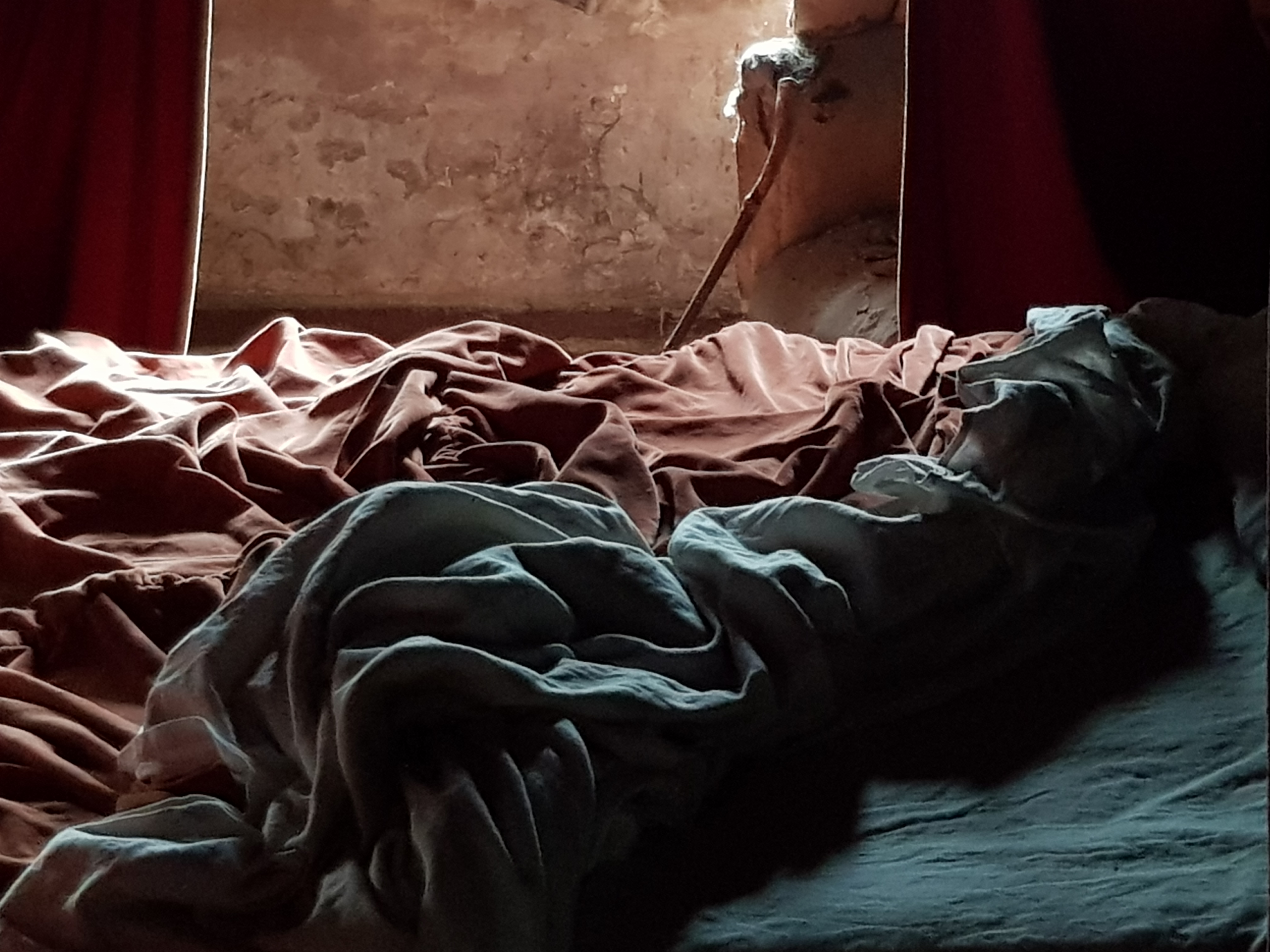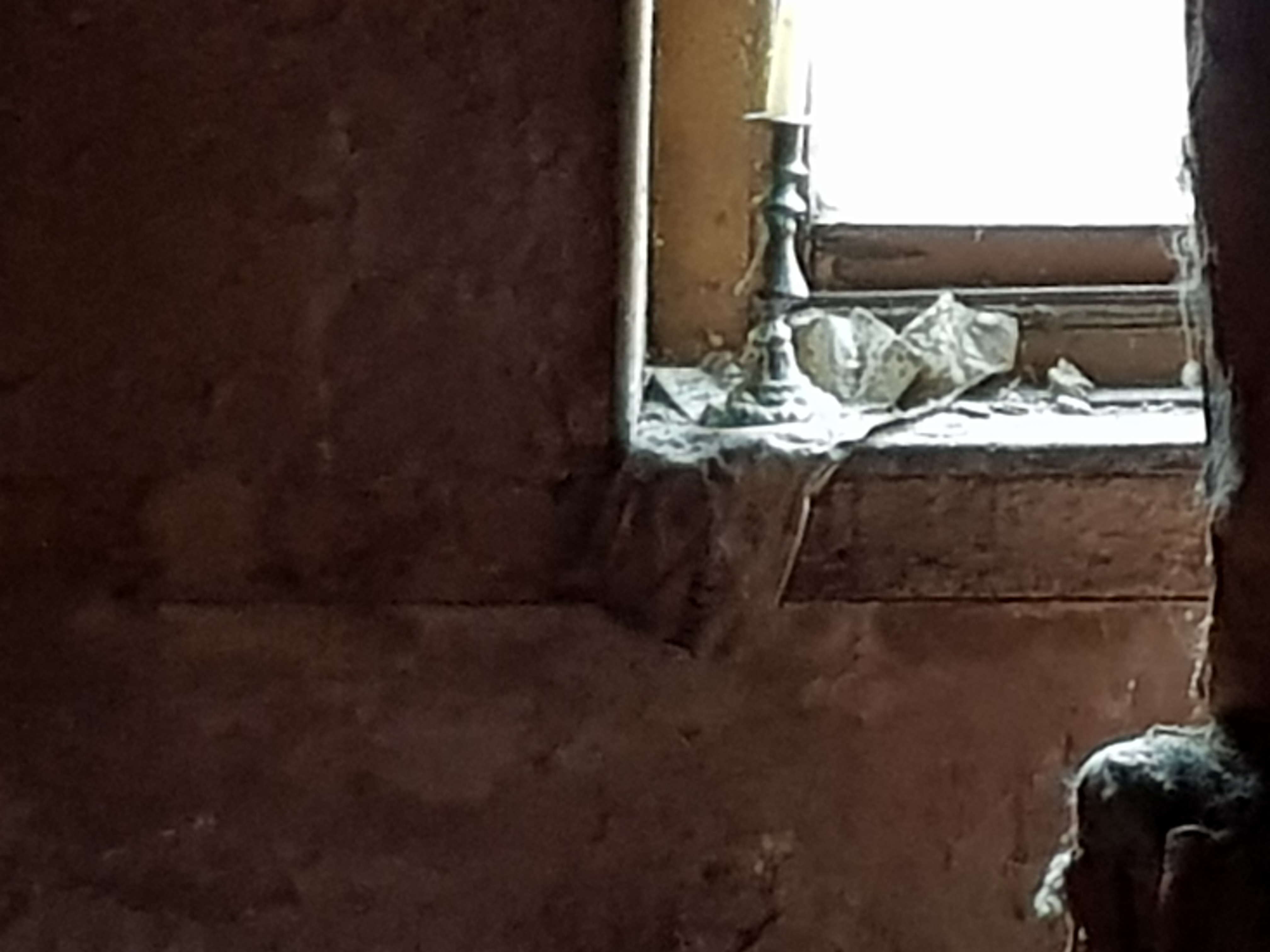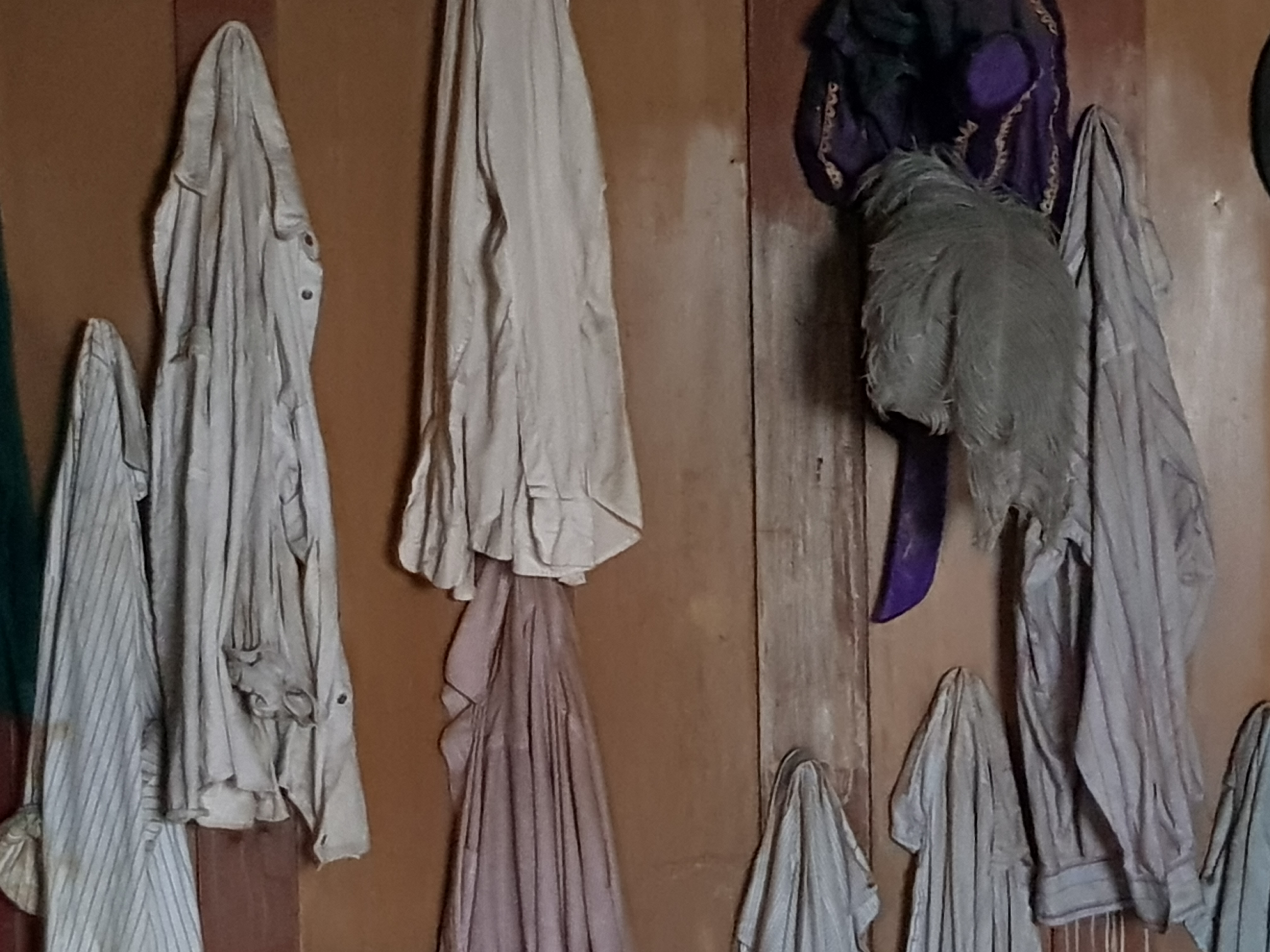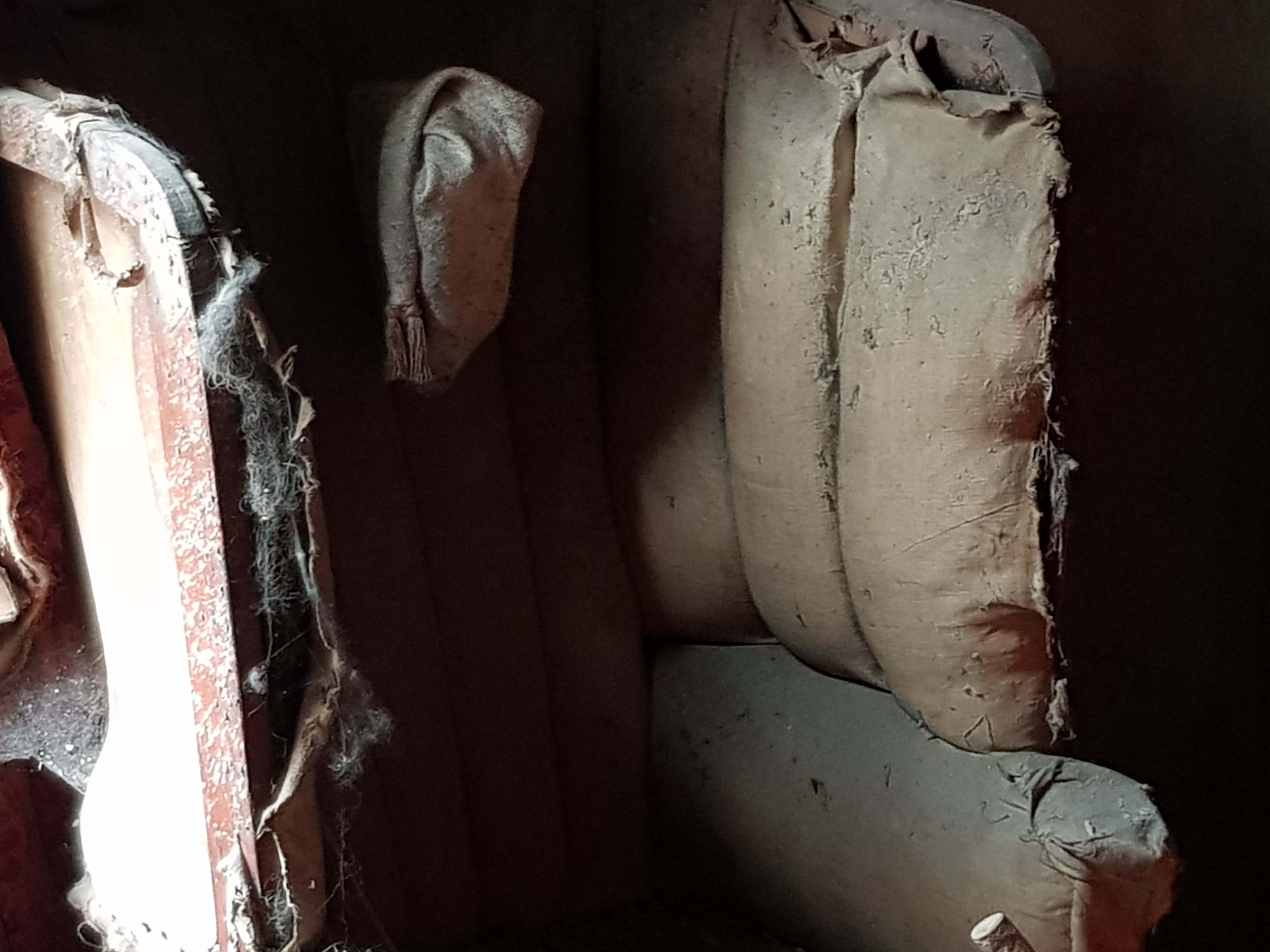
I had arranged to see Bill Viola’s big retrospective exhibition at the Palazzo Strozzi well before he was elected an Honorary RA, having been an admirer of his work ever since seeing The Messenger in the nave of Durham Cathedral in 1996, the date of The Crossing, the first work in his current exhibition (he also has exhibitions in Hamburg and Bilbao). The Crossing is a powerful introduction: stripped back to the essentials of the desert and pillar of fire. Next door is The Greeting, shown alongside Pontormo’s Visitation, borrowed from Carmignano, a tough double act which demonstrates, if it’s necessary, how much his work is imbued with Renaissance imagery. I liked The Four Hands (2001), a very simple, black-and-white work about the expressive power of hands – fingers clasped, touching and in prayer. Then you come across Uccello’s Flood and the effect is that you very much want it to move. Viola certainly knows how to use the sacramental qualities of slow-moving film to powerful visual effect and is not at all afraid of – in fact embraces – traditional biblical imagery with its layers of history and meaning.
Category Archives: Uncategorized
Medici Chapel
I was the first person in to the Medici Chapel, an early morning pilgrim before a morning flight, enjoying for a few moments before the other tourists arrived an opportunity to see and survey Michelangelo’s great tombs of Giuliano de Medici, Duke of Nemours, and opposite, Lorenzo di Piero de Medici, the Duke of Nemours, both so stately, symbolically composed, sitting alive above the lying statues of Night and Day or Dawn and Dusk, in the heart of a grand and balanced architectural composition, a great statement of funeral elegy:-
Florence Cathedral
On recent visits to Florence – and not so recent – I have tended to avoid the Cathedral, taking it for granted as it’s so dominant in the still medieval surrounding streets, so full of tourists, and so well known. But one of the benefits of going to the Museo del Duomo is that it forces one to engage with the Cathedral as a historical artefact, the product of well over a century of construction, beginning with Arnolfo di Cambio in 1296 (the first stone was laid on 9 September 1296). In 1334, Giotto was appointed to oversee its construction, which led to the building of the campanile, and he was succeeded by Andrea Pisano. By 1418, only the dome remained to be built.
The Baptistery:-
The Cathedral:-
I also took photographs from the terrace on the top of the Museo del Duomo:-
Museo del Duomo, Florence
I have wanted to se the Museo del Duomo in Florence ever since it was reinstalled by Timothy Verdon in 2015 and described by many as a model of good quality museum display.
It includes Ghiberti’s east Baptistery doors, won in competition in 1401 when he was only twenty one, beautiful, but still essentially gothic images:-
Next door, the Gates of Paradise. I don’t think I’ve ever seen the originals before or studied the combination of full and half relief and quality of the bronze modelling:-
This is Brunelleschi’s death mask, as he was on his deathbed, exhausted from the effort of constructing the dome, in 1446:-
One of Donatello’s prophets, very early:-
Habbakuk:-
I liked the chalice of Cardinal Giulio de’ Medici:-
And the opportunity to see Donatello’s Cantoria:-
Bandinelli’s Self portrait:-
You end with Michelangelo’s Pietà:-
Old Chelsea (2)
Having upset people with my rude comment about the King’s Road, I am making reparation by adding some extra good things in Chelsea on my walk from the V&A to Petyt Hall.
The houses in Beaufort Street, looking south towards St. Luke’s:-
St. Luke itself, designed by James Savage in 1820 in pre-ecclesiological Gothic:-
And Argyle House, actually on the King’s Road, by Giacomo Leoni, grandly reticent, with its nicely wonky urns on the façade:-
Old Chelsea (1)
I’ve never really seen the point of Chelsea – too posh for my taste and the King’s Road long ago turned boring, apart from the Chelsea Arts Club and Green & Stone. But as I turned off the King’s Road and walked down Glebe Place, I realised that there is still the residue of the old, late nineteenth-century artists’ community with houses by Charles Rennie Mackintosh and Philip Webb, a very odd house (no.50) designed by John Lowe in the 1880s, a completely bogus and mis-spelt plaque recording where Alfred Munnings lived, and eighteenth-century houses in Cheyne Row, vestiges of what was once a village:-
On Chelsea Embankment, a lampstand by the Coalbrookdale Iron Foundry (with glimpses of Norman Foster through the trees beyond):-
V&A Entrance Courtyard
I went back to see the new Entrance Courtyard at the V&A, having missed its opening. It’s pretty impressive: grandly complex geometries inserted elegantly into the old Boilerhouse courtyard of which scarcely a trace remains; a luxurious black lacquered staircase turning down into the deeply dug exhibition space which currently looks like an empty football stadium before the installation of the autumn Opera exhibition; and then back by another black lacquered staircase which snakes up to the shop, producing an Escher-like effect, with an interesting light brought down into the basement. Only one small lift. What will happen when the lift breaks down ? Otherwise, it’s all very spacious and impressive, creating good open public, as well as exhibition, space (the café is open till 9), and making it possible to appreciate the quality of Aston Webb’s detailing, newly scrubbed up.
The hole in the courtyard:-
The view down the entrance staircase:-
Back up:-
The entrance to the Blavatnik Hall:-
Beautiful detailing on the steps:-
And Aston Webb newly revealed:-
Royal Trafalgar Hotel
I had a slight frisson last night as I was walking across Leicester Square and spotted the top of the Trafalgar Hotel across a huge and vacant building site. Described by Pevsner as ‘a period piece’, it was designed by Charles Pike & Partners in 1967. Looks like a survival from Comintern:-
St. Martin-in-the-Fields
I was able to bide my time before an evening event at the National Gallery not by watching Formula One racing on a big screen, but by admiring the stonework on the façade of St. Martin-in-the-Fields, a church which in theory I know very well having worked in its shadow for thirteen years, but which suffers from over-familiarity, from not being robustly baroque or purely Palladian, and from multiple reproduction in our former colonies. The church was designed by Iacobi Gibbs ArchiTectus, cost £33,661 16s 7d. and was completed in December 1724, although the inscription carved on the tympanum gives the date as MDCCXXVI:-
Burlington Gardens
I have been waiting for a moment when the sun shines on the north façade of James Pennethorne’s building in Burlington Gardens to celebrate the fact that the scaffolding is at long last coming down, revealing the freshly cleaned and differently coloured stonework as well as the statuary in its newly restored glory. At which point, it is maybe worth saying that if any of my readers wants to buy association with one of the statues, there are several, including Archimedes, Plato and Goethe, still available:-


You must be logged in to post a comment.