
A busy day for our Kiefer exhibition. The private view last night was more crowded than I have ever known a private view, full of the European art crowd, young, rich and smart, all in their black suits. Kiefer himself arrived, immaculately lean, mainly for the dancing at the after party. Reviews have been wonderful, five stars in the Times, five stars in the Guardian. And the experience of the exhibition is overwhelming, full of a relatively small number of monumental works, tracing his career from its beginning and including works which are fresh from the studio. I strongly recommend seeing the exhibition in daylight because both the octagon, which contains a vast installation called Ages of the World, and the penultimate room, which contains seven grand works of wheatfields (they refer to the so-called Morgenthau Plan whereby Germany was to become farmland), are bathed in natural daylight.
Category Archives: Uncategorized
The Gardens at Oare (2)
I realised in the night that I had not done full justice to my experience of the garden at Oare because I recorded our tour of the kitchen garden on Saturday afternoon, but not the crystal clarity of the light on Sunday morning as I looked out of the bedroom window:
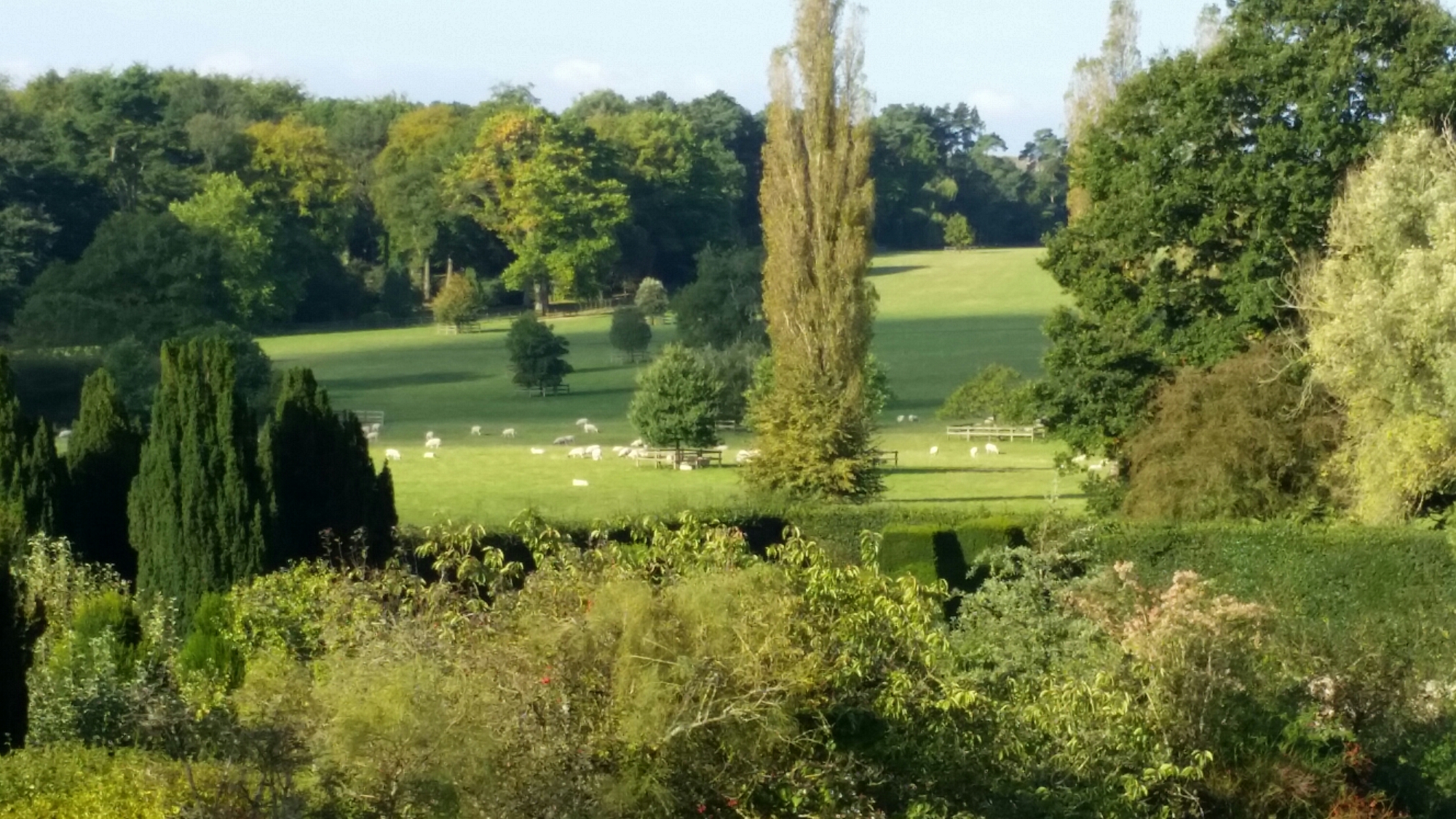
The view across the sweep of the freshly mown lawn:

Anselm Kiefer (2)
Yesterday, I had a first tour of the Anselm Kiefer exhibition with Kathleen Soriano, its curator. What came across was, first, the extent to which it is conceived as a paintings exhibition, not so much his work as an installation artist, in homage to the scale and history of Sidney Smirke’s grand exhibition galleries; second, the way in which it is suffused by imagery from the Catholic church, including palettes with angels’ wings; and, third, the extent to which it is informed by German woodcuts from his early ‘Attic’ series based on his studio in Hornsbach right through to the collage of woodcuts displayed as folding screens in the last room.
Oare House
I have always loved Oare House just below the Marlborough Downs ever since I visited it as a schoolboy on my bicycle. The house was built for a wine merchant, Henry Deacon, in 1740. He took on as an apprentice a poor boy called John Hiller from Ireland who married Deacon’s widow, inherited his house, and left it to his sister’s son, a classic eighteenth-century story. In the early 1920s it was extended in a playful Georgian style by Clough Williams Ellis for Sir Geoffrey Fry of the chocolate family, who became private secretary to Stanley Baldwin: 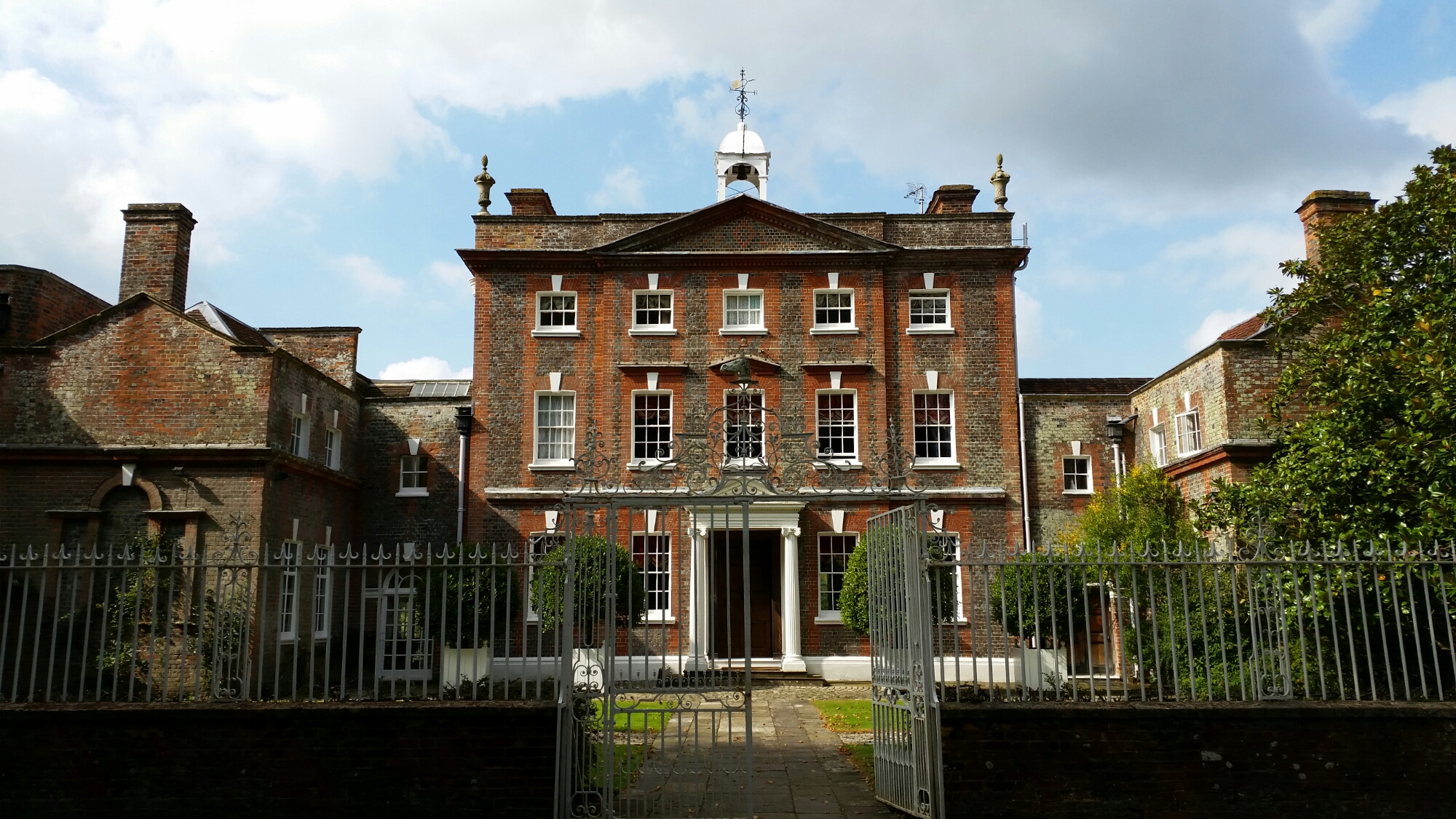

The Gardens at Oare (1)
I like nothing better than our annual tour of the gardens at Oare. Normally we are there in high summer when the colours are hot and abundant. In autumn, the leaves in the avenue are already turning and the garden is beginning to close in for winter.
This is the avenue:

I have always admired the immaculate, apple pie order of the toolshed:

Scotland
It is hard not to give thought to Scotland this morning and to the implications of the vote. I’ve been trying to work out how Scottish I am. My mother always claimed to be part Scottish through the Buchanan Wollastons which gave us a right to wear the hideous Buchanan tartan. And my father was part Leslie, a better tartan I always thought. So, I suppose that, like many of the British, I feel a sense of long histories intertwined and a mild sense of relief that the Union has been preserved.
London Design Festival
Ben Evans took me on a whistlestop tour of those elements of the London Design Festival housed at the V&A. There is an astonishing and beautiful installation like a silver aeroplane wing by Edward Barber and Jay Osgerby in the Raphael Cartoon Court:

I liked the irregularity of a line of blown glass jars by Jeremy Maxwell Wintrebert:

Reimagining Mayfair
I have spent much of today thinking about, and chairing a set of presentations about, a project organised by the RA’s architecture programme and Architects’ Journal called Reimagining Mayfair. The idea of the project was to invite architectural practices to imagine how those parts of Mayfair which surround the RA could be reanimated and reinvigorated through an inventive use of art, new streetscape and architecture. One project by EPR with Kate Malone uses flags, umbrellas and hot-air balloons to draw attention to the area. Andrew Phillips has reimagined it as a Roman ruin. DK-CM used Pablo Bronstein to create the idea of a May Fair, animated by ephemeral pavilions. And Weston Williamson invited Yinka Shonibare to turn Burlington Gardens into a souk by the use of a batik awning. I hope the projects will encourage Westminster City Council to think creatively as to how the grid of streets round Burlington Gardens could be turned into a cultural neighbourhood like Chelsea in New York, by a) encouraging the art galleries to open on Saturday b) reducing the perennial traffic jam, and c) improving the quality of street surfaces and pavements.
National Portrait Gallery
It’s a long time since I’ve been back to the National Portrait Gallery and glided up the grandest escalator in western Europe to the restaurant overlooking the roofs of the National Gallery and down Whitehall. I remember the moment when Jeremy Dixon and Edward Jones triumphantly described how they had persuaded a warder to let them out onto the roof, which I had never done, and discovered the greatest possible view of the institutions of British goverment to match the portraits below. I was always a bit sceptical that people would find their way up to the top of the building for a cup of tea, but I was quite wrong.

Virginia Woolf
A trip to the National Portrait Gallery to hear Catherine Goodman in conversation with Rachel Campbell-Johnston gave me an opportunity to see the exhibition of Virginia Woolf portraits, not a wholly easy subject because there are not so many of them, mostly photographs, the best of them (and best known) taken when she was 20 by George Beresford, supplemented by studio portraits by Man Ray in 1934 and Gisèle Freund in 1939. But Frances Spalding has done a good job in giving a sense of her life as a whole, her family and friends, all of them intellectual and intense, dominated by Virginia herself with her fragile beauty and thyroid eyes.


You must be logged in to post a comment.