Trinity College Chapel

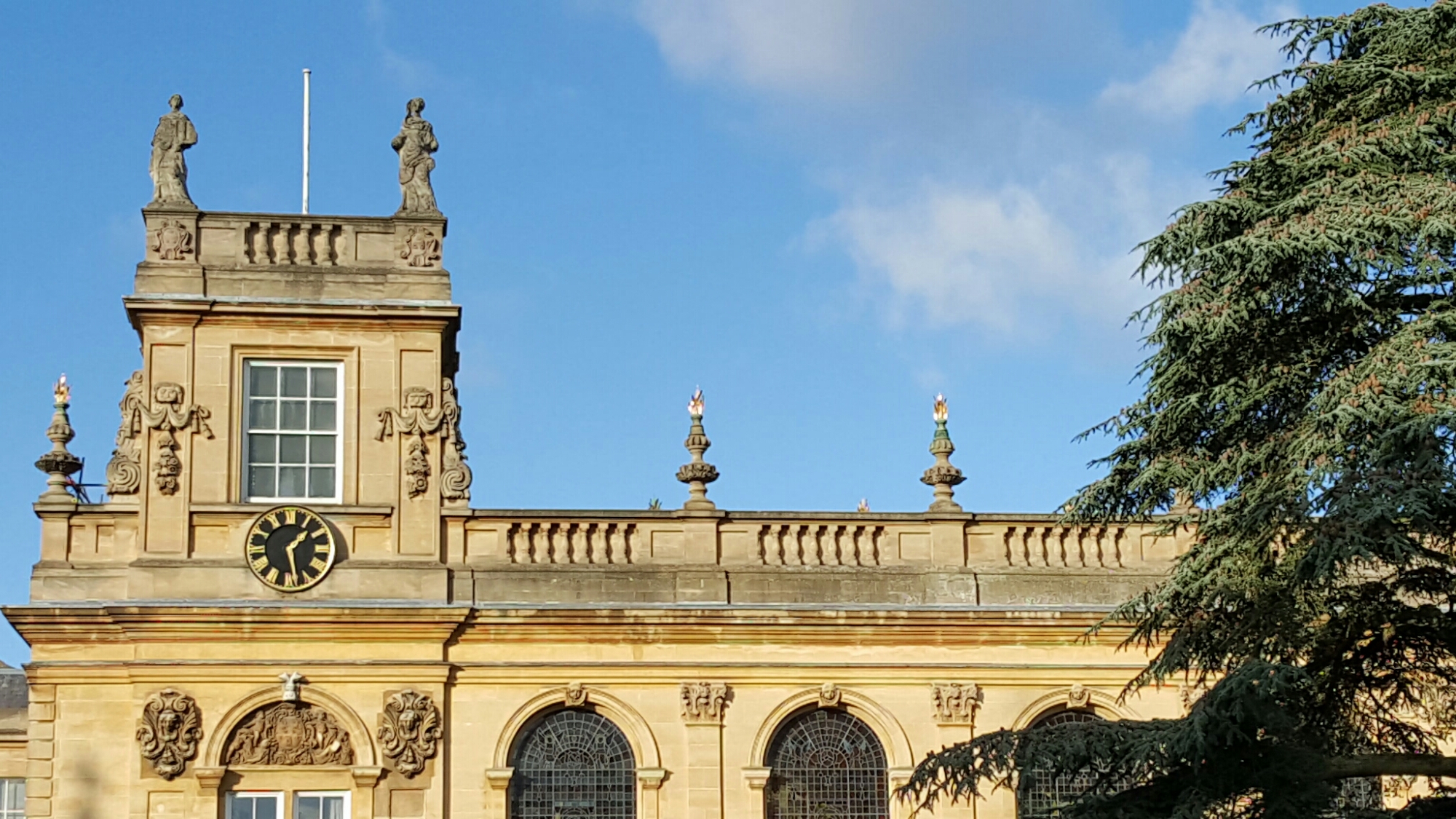
As we were having lunch in the Ashmolean, we were asked if we would like to see the Grinling Gibbons carvings in Trinity College chapel close up.   Of course.   It’s not known who designed the Chapel.   It used to be thought to be by Wren or Dean Aldrich, but the key person was Ralph Bathurst, who helped found the Royal Society, was chaplain to the King and became President of Trinity in 1664.   He commissioned Wren to design a new building in 1665, but work on the chapel only began in 1691.   He was a vigorous fundraiser, lamenting that a potential donor had gout in her right hand ‘which the Scripture makes to be the Giving Hand’:-
image

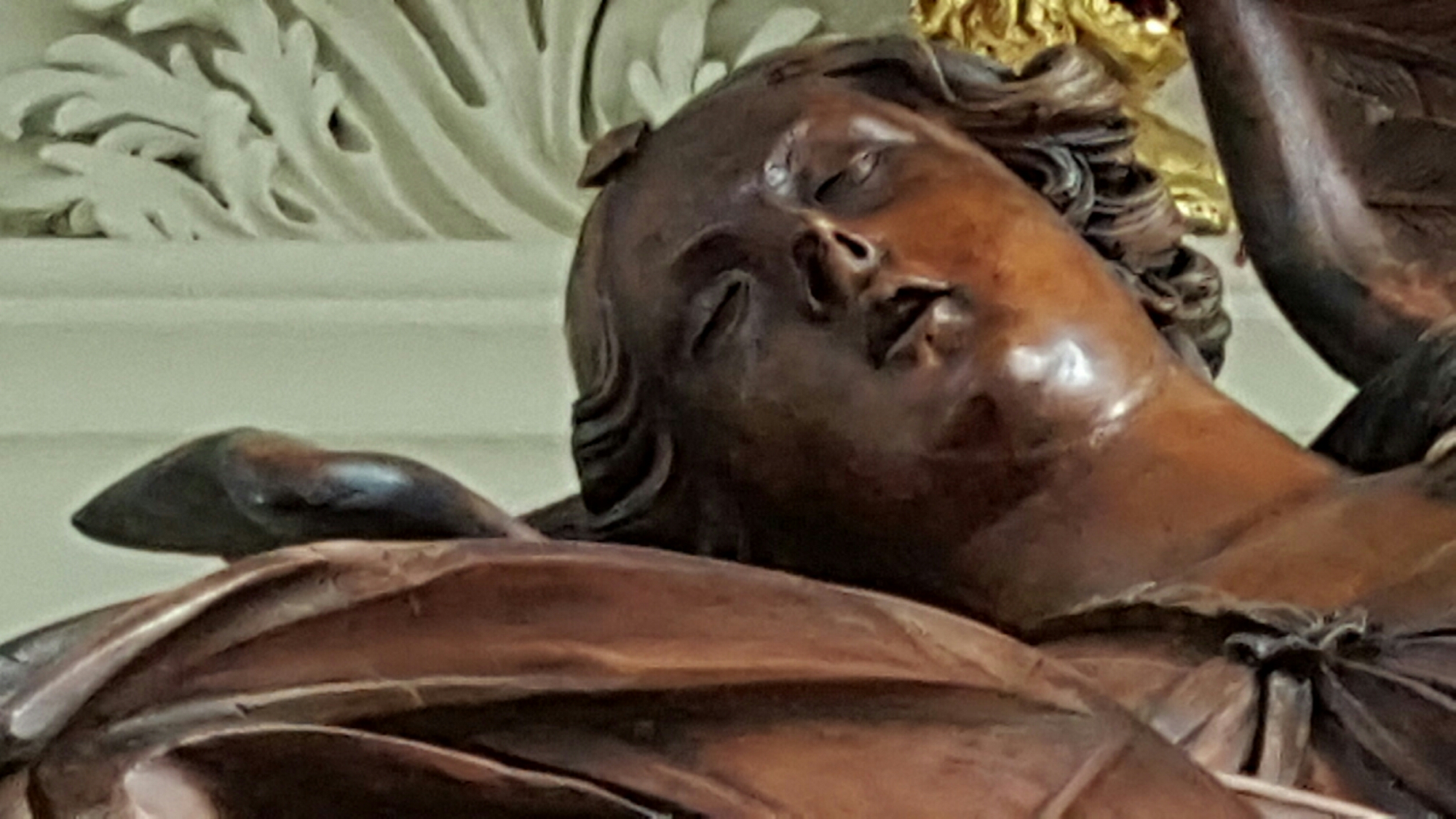
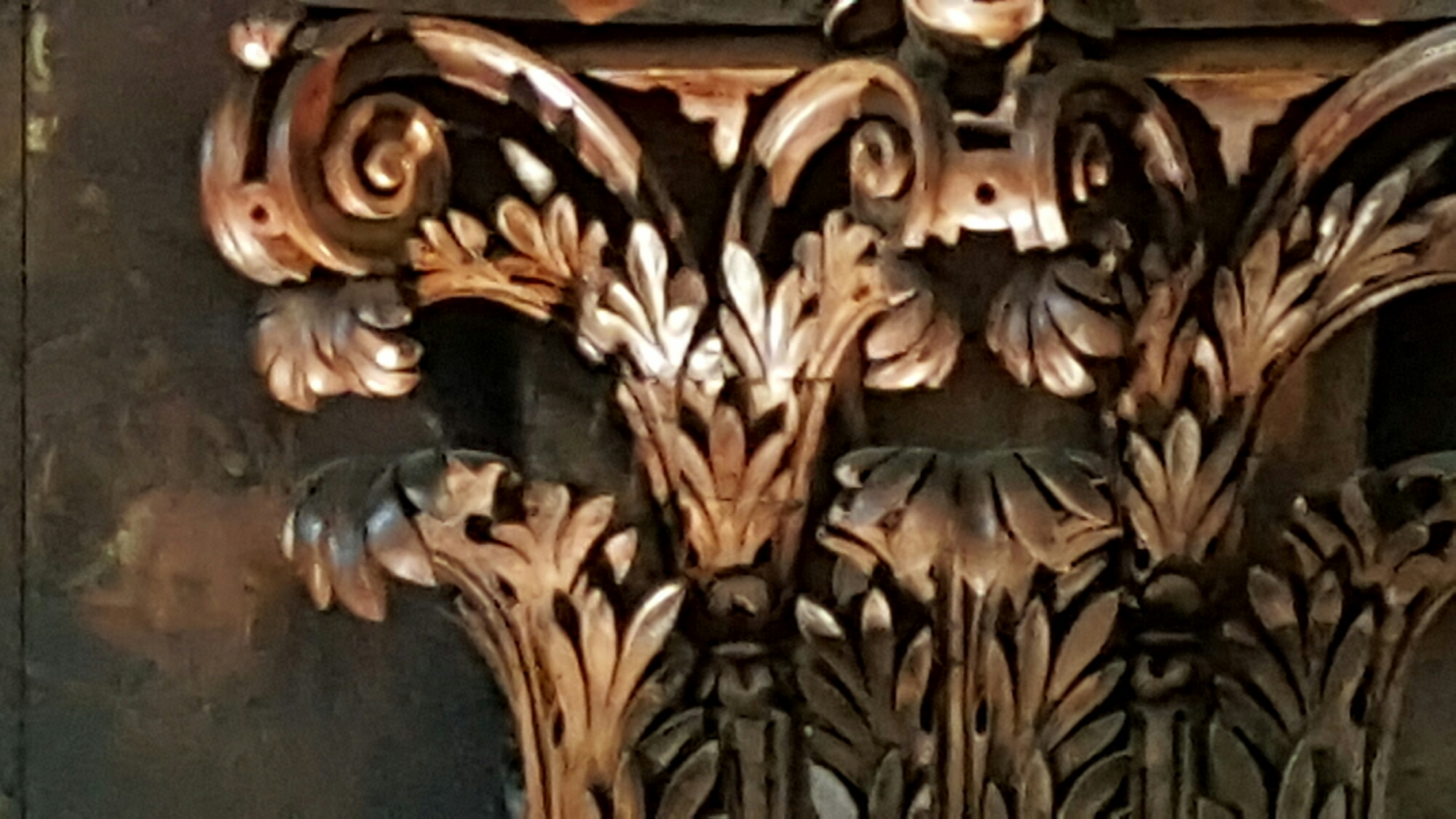
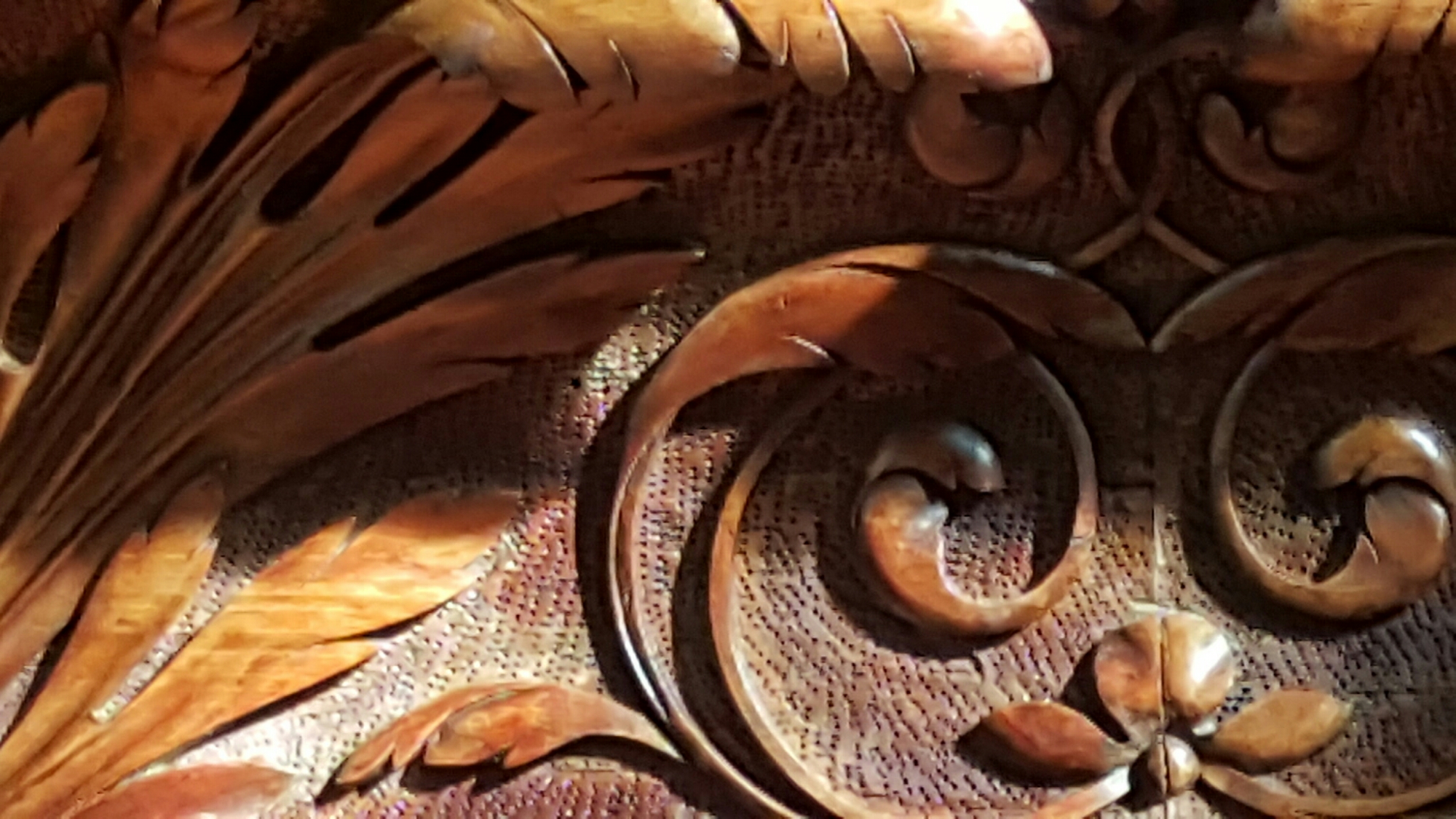
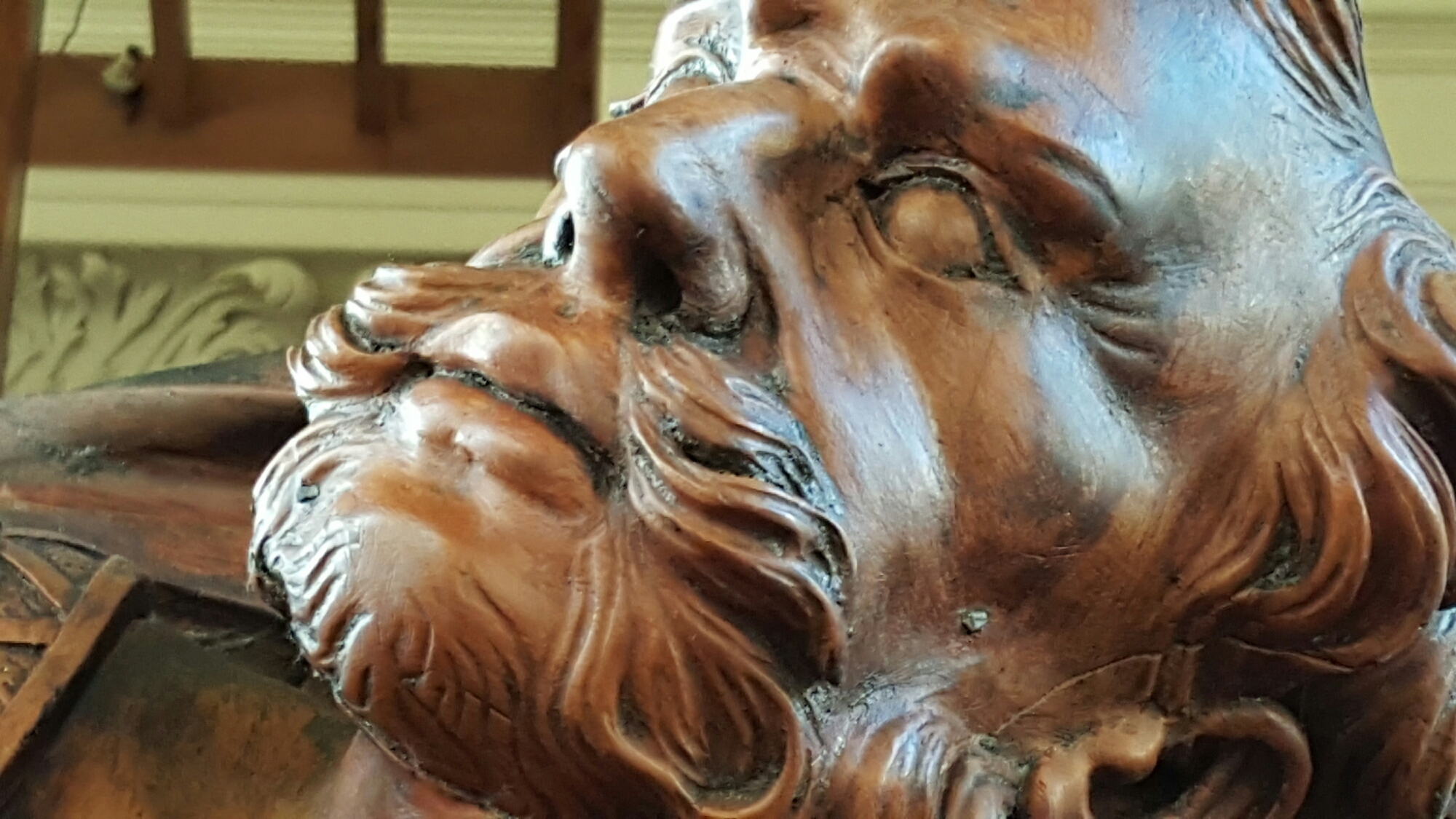
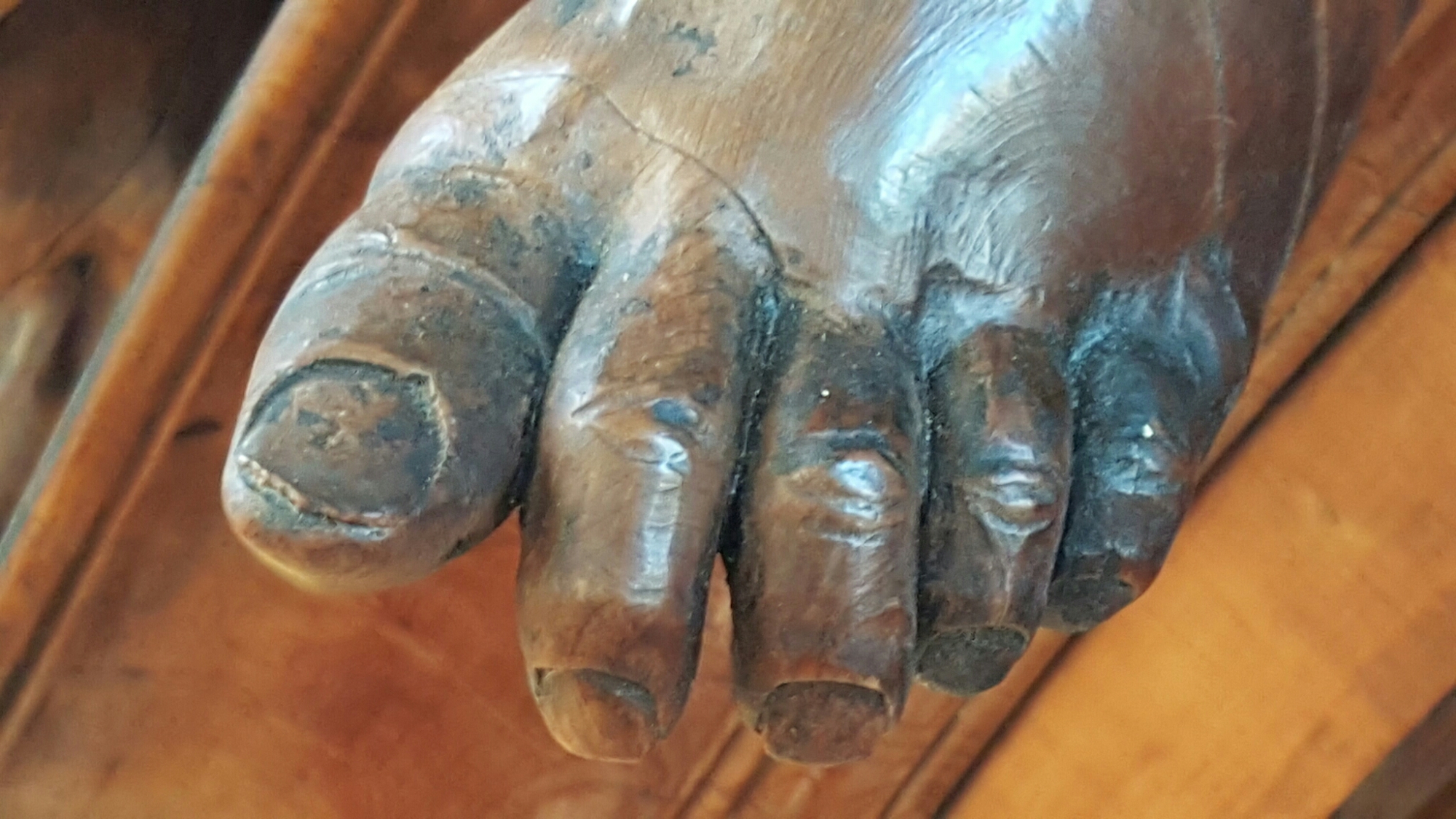
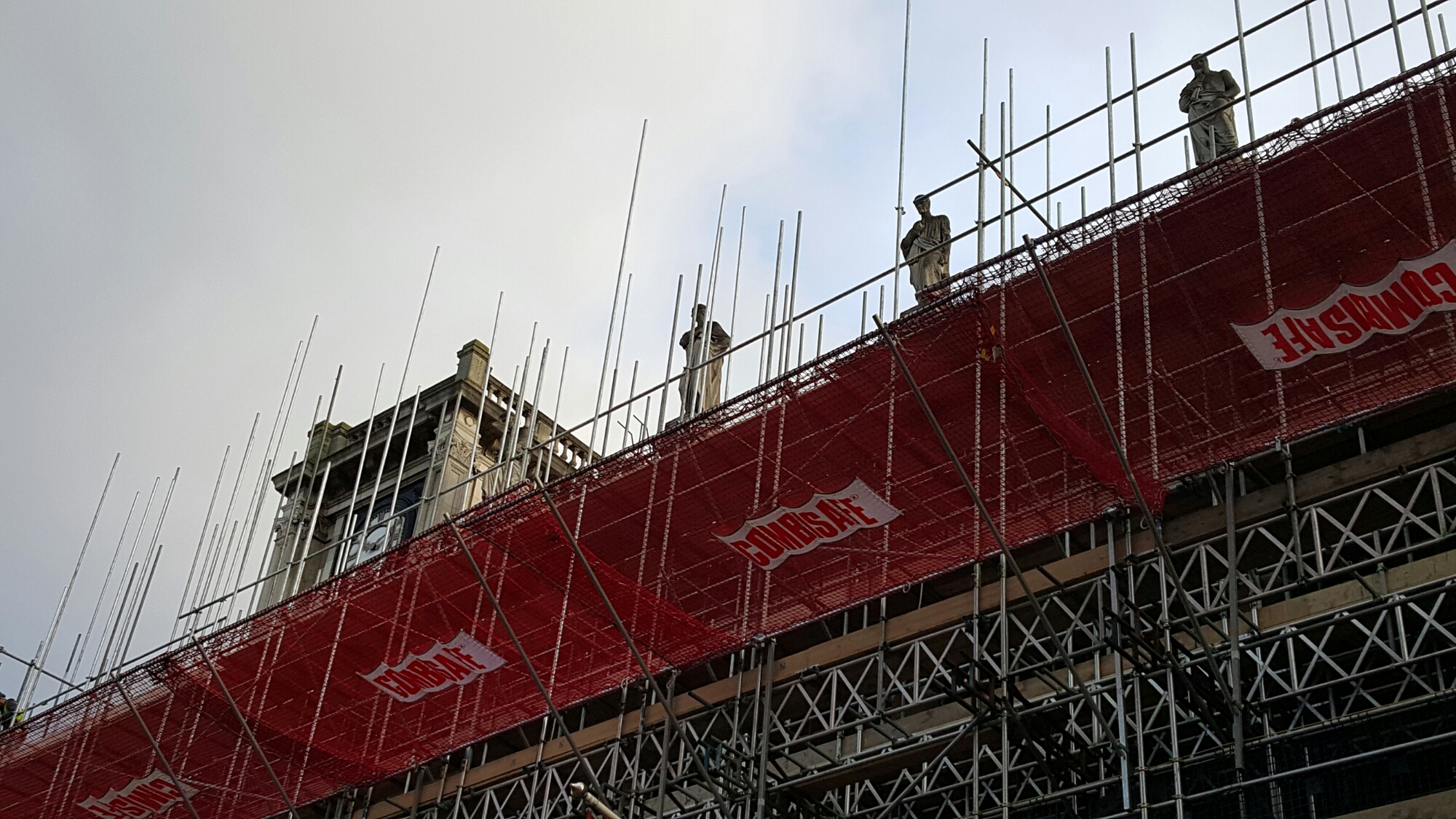
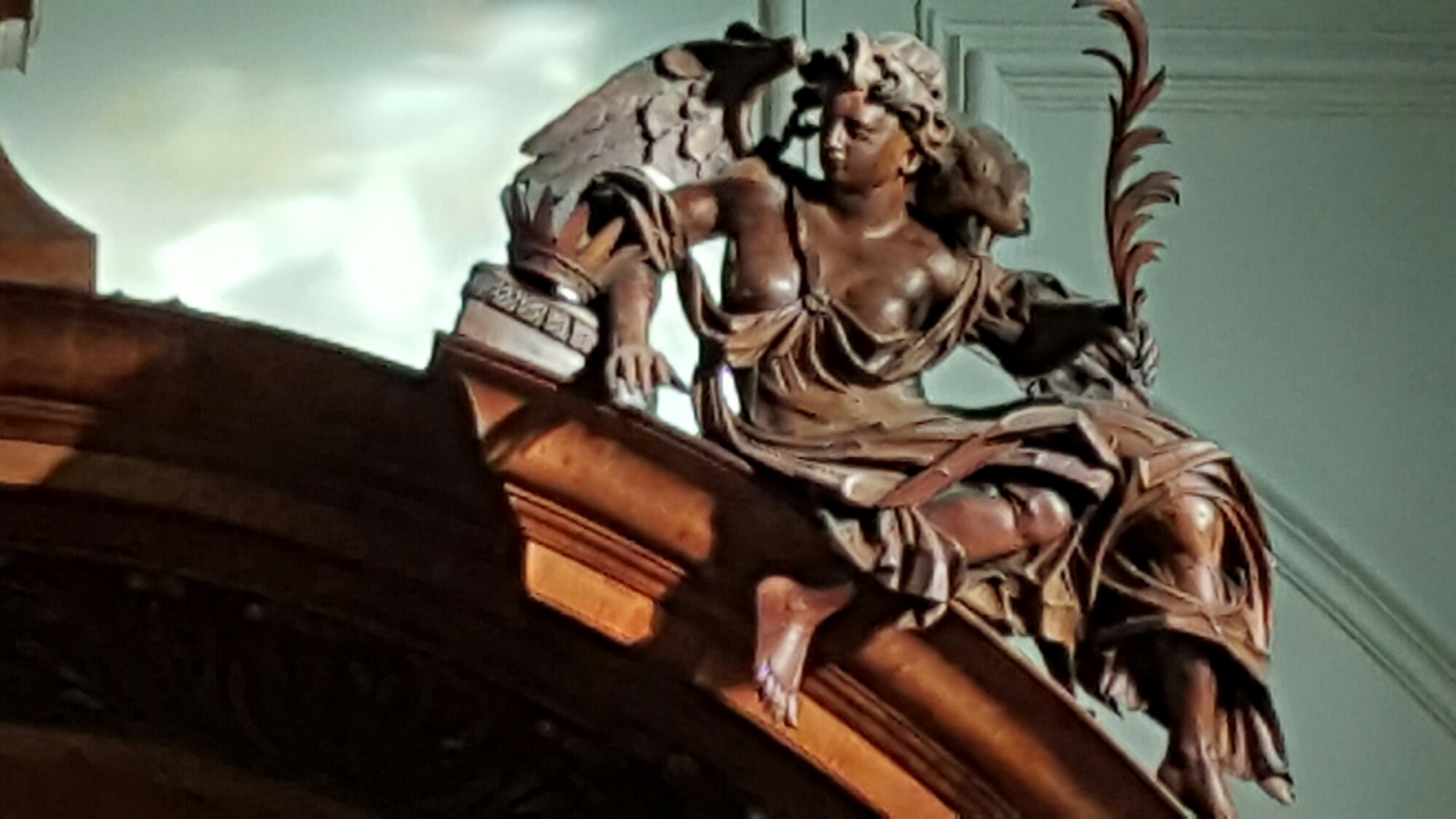
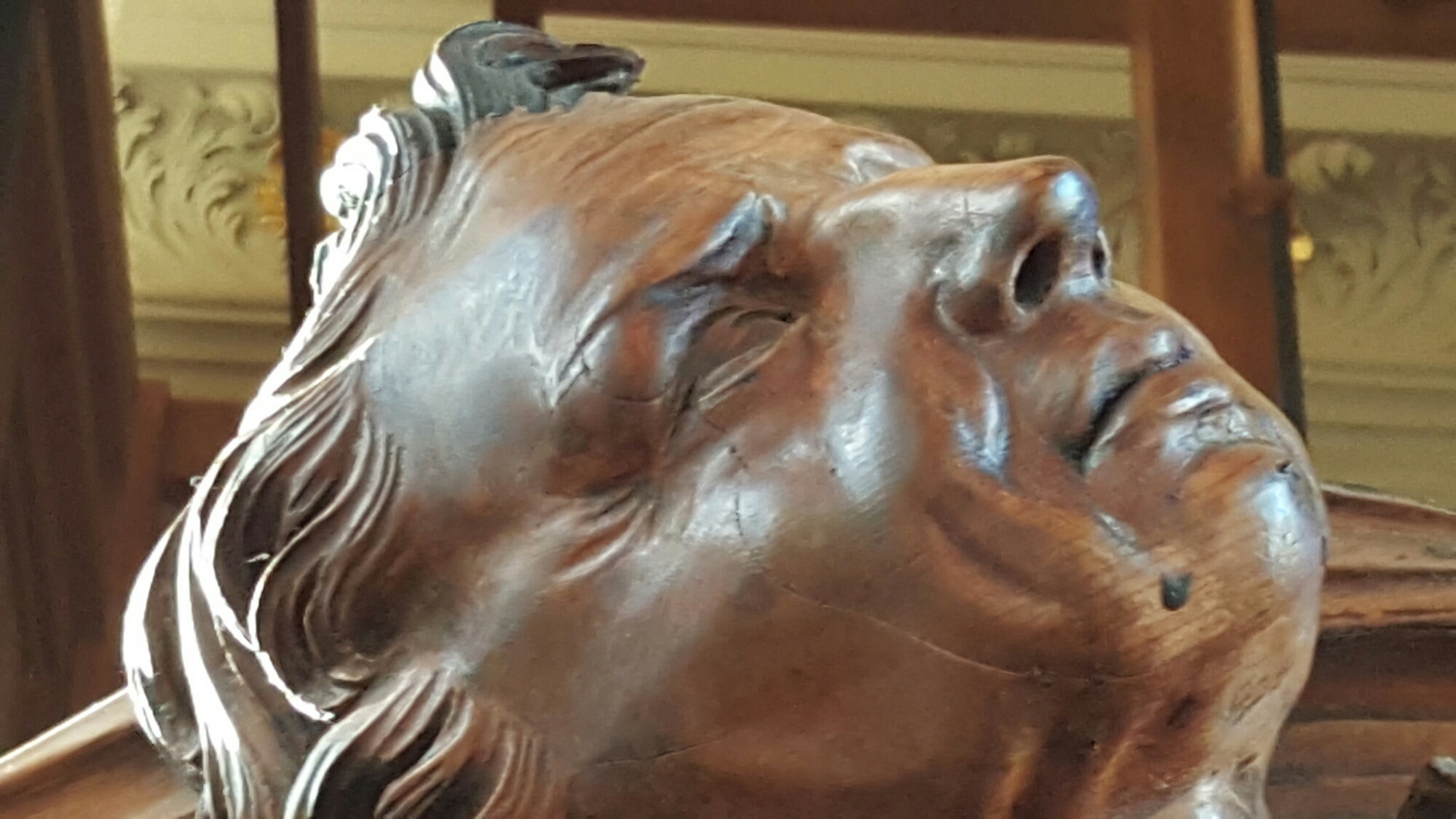
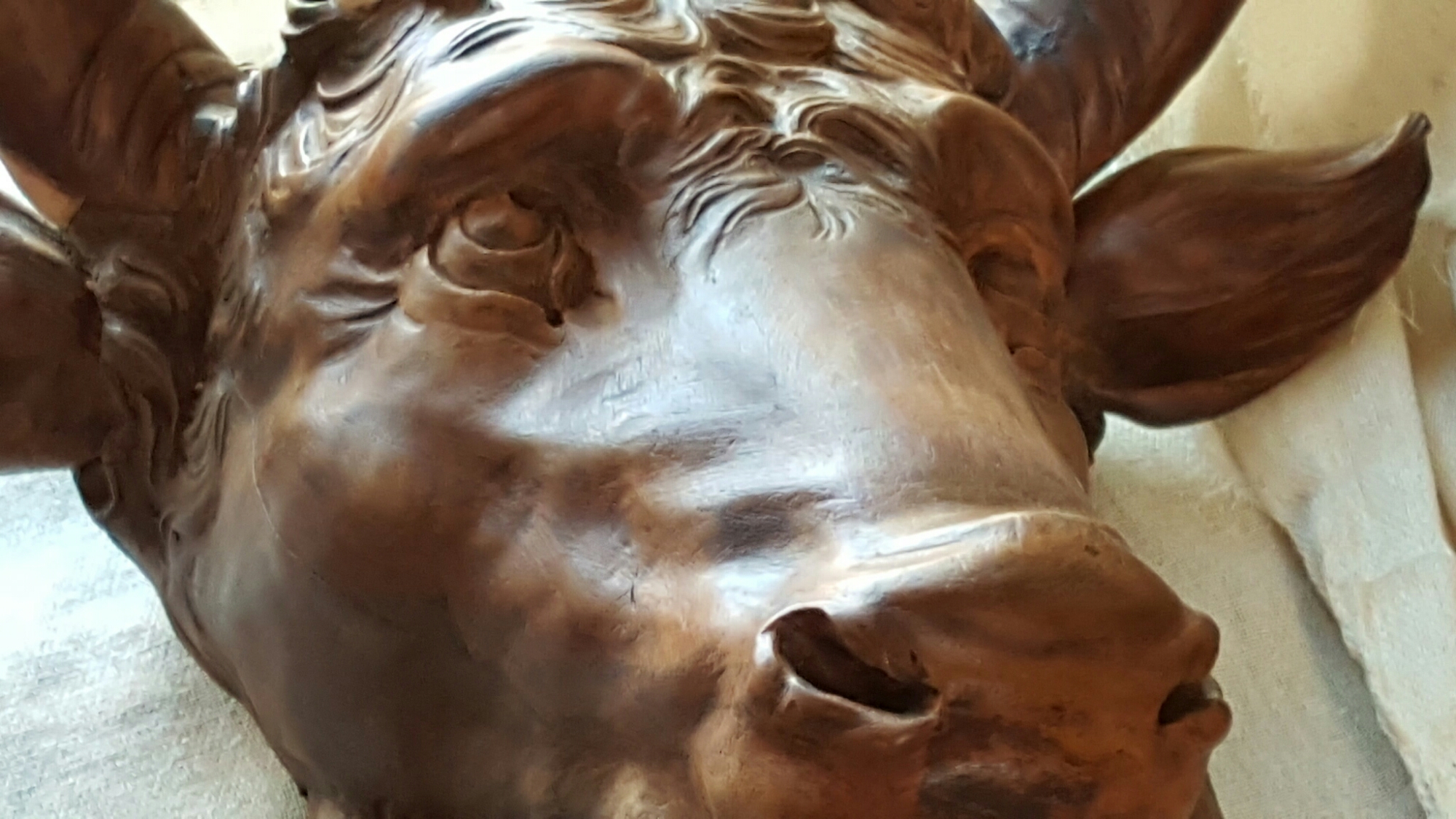
We climbed the scaffolding and were able to see the detail of the carving, previously ebonised.   Who was responsible for them ?   It could be the Gibbons workshop.   There was an Oxford joiner called Arthur Frogley who had been mastercarpenter at the Sheldonian and worked on the chapel at St. Edmund’s Hall.   Or Jonathan Maine who worked for Wren at St. Paul’s.

The figures on either side of the altar:-
image

image

Details of the carving at the east end:-

image

image

image

The figure carving at the west end:-
image

image

image

And some of the pieces on the floor waiting to be reinstalled:-
image

image

Standard

Blavatnik School of Government

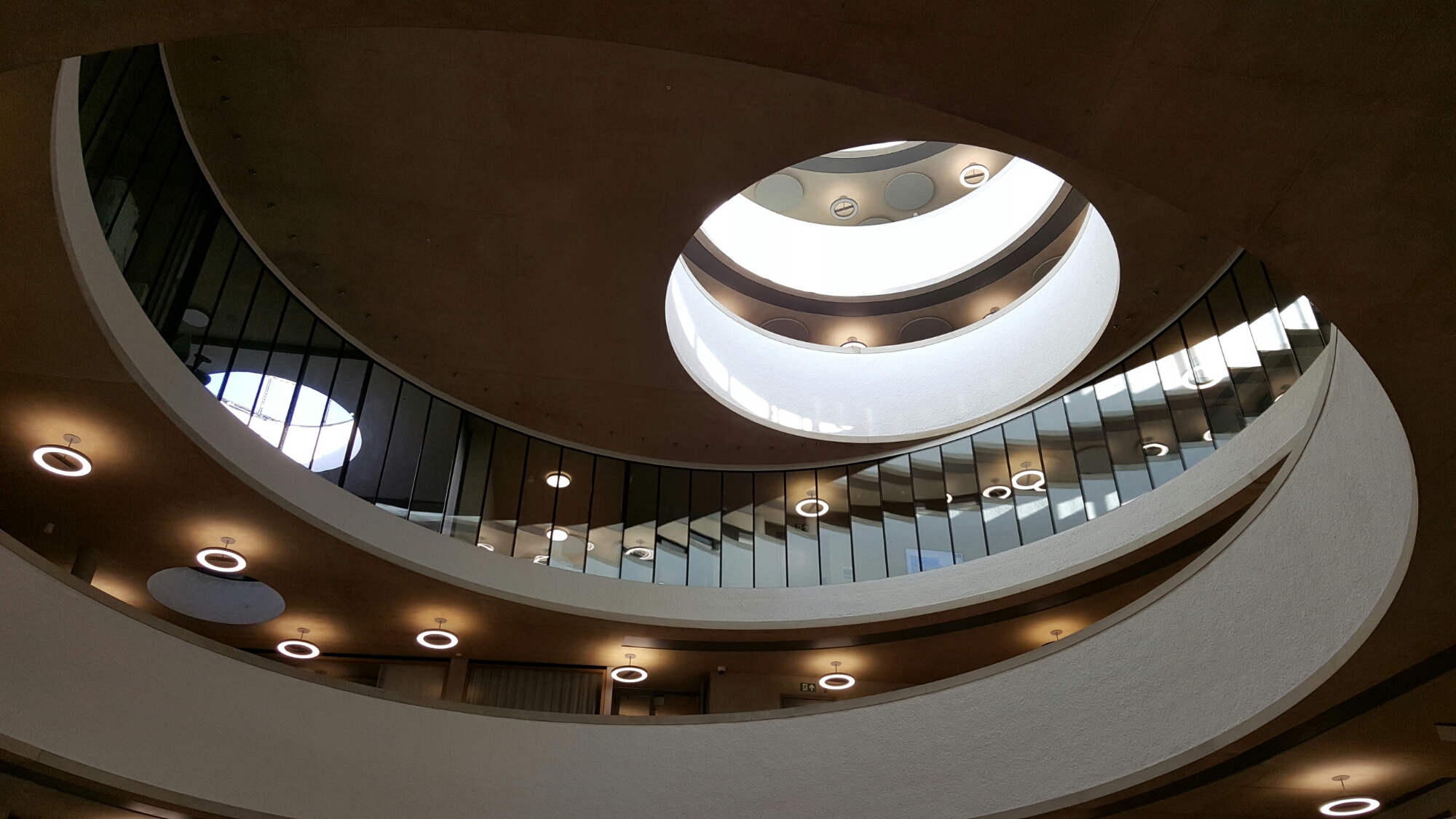
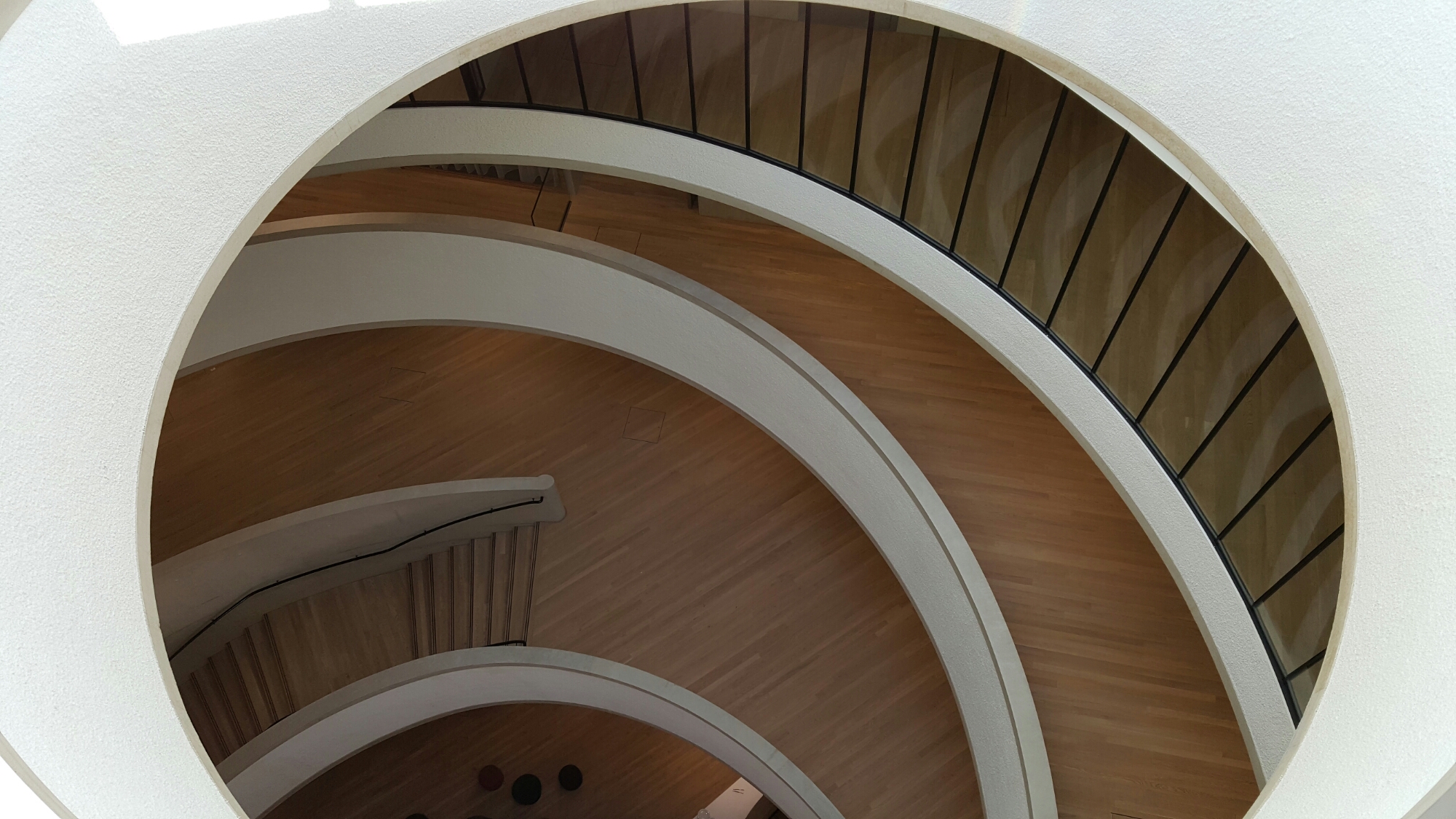
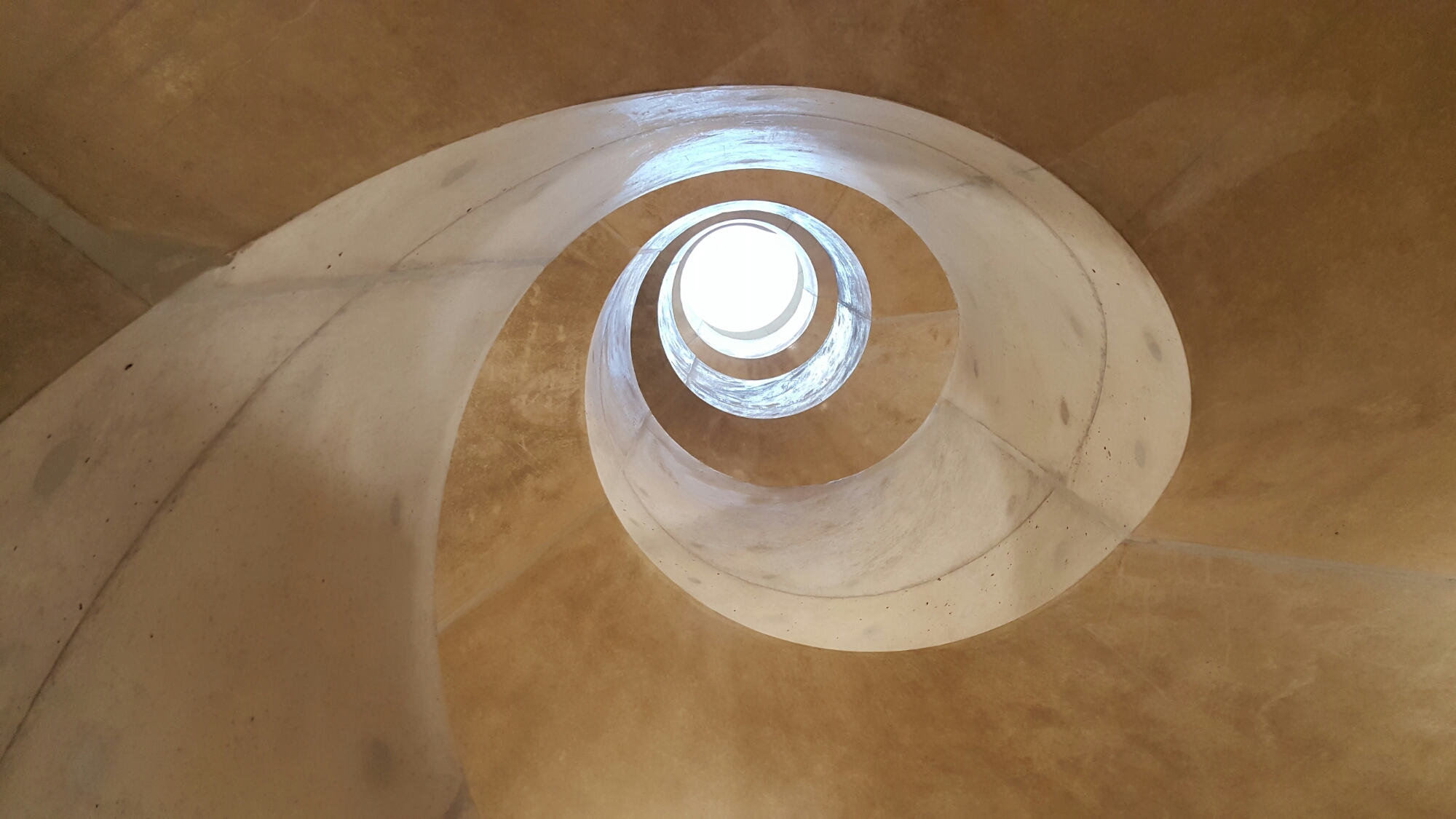
Since we were in Oxford, we took the opportunity of visiting the brand new Blavatnik School of Government by Herzog and de Meuron, only just opened on the big Radcliffe Infirmary site up Walton Street.   Dixon.Jones were candidates for the project.   So was David Chipperfield.   Herzog de Meuron have designed an opulent spaceship with a generous curving interior like the inside of the Guggenheim, sweeping and swooping in concrete expressionism:-

image

image

image

image

image

Standard

Saïd Business School

I went to Oxford yesterday to visit the Saïd Business School with its architects, Jeremy Dixon and Edward Jones.   I have often admired the Mausoleum of Halicarnassus as one gets out off the train and walks past the brise soleil on one’s way into the city.   But I had not registered how extensive it is, stretching back with two classical arcades, one open, the other closed, to an open amphitheatre at the end.   The client wanted the strong element of classicism.   It creates a satisfying hybrid, with a touch of California or is it Asplund ?  Beyond is the more recent block for executive education reached by a ramp under a pergola to a deck looking out over the garden and the city.

The Mausoleum:-

image

image

The Executive wing:-

image

image

The amphitheatre:-

image

Standard

Maurice de Sausmarez (2)

I have been kindly given a copy of the catalogue of the exhibition of the work of Maurice de Sausmarez ARA which is currently on at the University Gallery at Leeds, together with the book of his writings, On Artists and their Making.   It has taught me a lot about him:  that he was born in Sydney and his father was eaten by a shark;  educated at Christ’s Hospital and the Royal College of Art;  a friend of Peggy Angus;  he established the teaching of Fine Art in Leeds University at a time when art history was only taught at the Courtauld and Glasgow;  became Principal of Hornsey School of Art in 1959 and of the Byam Shaw in 1962;  an ARA in 1964, he died in 1969 aged only 54.   He did a lot in a short life.

Standard

Ed Vaizey

I went to an event at the Royal Opera House to celebrate the fact that Ed Vaizey has now been in post as Minister for the Arts for longer than any of his predecessors, stretching back to Jennie Lee, who was appointed Minister of the Arts by Harold Wilson in 1964.   It’s impressive that he has remained in post from the beginning of the Coalition Government, taking up his current post on 14 May 2010.   And he was Shadow Minister before that.   He gave a speech which was wry, funny and self-deprecating (well, not entirely).   Let’s hope that he has written his White Paper in this new, pugnacious style.

Standard

Adelaide House

I was walking past Adelaide House last night on the north side of London Bridge and was impressed by the American style of its façade, designed by Burnet and partners at more or less the same time that they were working on Unilever House.   When built, it was the tallest building in London (hard to believe) and it has an Egyptian style entrance, as well as sculpture by Sir William Reid Dick.   Apparently there used to be a golf course on the roof:-

image

Standard

Burlington Gardens

I went on a site visit of our building project in Burlington Gardens for only the second time since building work began in late October.   It’s a strange experience seeing a building stripped to its bones, like an old lady seen in corsets.   The volumes change.   With all the later accretions removed, one can see how grand the big spaces are going to be.

This is the view of Pennethorne’s north façade:-

image

image Continue reading →

Standard

Townscape

I have been trying to find out more about attitudes to city planning and have been reading Colin Rowe and Fred Koetter’s Collage City, published in 1978.   They have an admirable description of the origins of townscape:  ‘Townscape, a cult of English villages, Italian hill towns and North African casbahs, was, above all else, a matter of felicitous happenings and anonymous architecture…in the pages of The Architectural Review, even in the early nineteen-thirties, one can detect the uncoordinated presence of all its later ingredients.   A perhaps wholly English taste for topography;  a surely Bauhaus-inspired taste for the pregnant object of mass production – the hitherto unnoticed Victorian manhole, etc.;  a feeling for paint, the texture of decay, eighteenth century folly and nineteenth century graphics…townscape could readily be interpreted as a derivative of the late eighteenth century Picturesque;  and, as it implicated all that love of disorder, cuktivation of the individual, distaste for the rational, passion for the various, pleasure in the idiosyncratic and suspicion of the generalised which may, sometimes, be supposed to distinguish the architectural tradition of the United Kingdom, so (almost like Edmund Burke’s political polrmic of the 1790s) it was enabled to thrive’.

Standard

Sainsbury Centre (4)

There is a good MA dissertation by Ian McIntyre available online which gives helpful information on the pattern of Robert and Lisa Sainsbury’s collecting.   Robert read history at Pembroke College, Cambridge from 1924 to 1927, but never entered a museum and spent much of his time playing bridge.   Then he studied accountancy.   But he began to collect private press books whilst still at Cambridge which led him to Zwemmers in the Charing Cross Road.   This was where he first encountered the work of Jacob Epstein.   He acquired two Epstein drawings and Epstein’s Baby Asleep in 1931.   The following year he bought Henry Moore’s Mother and Child from the Mayor Gallery for £158.   In 1933 he established the Gemini Press with Blair Hughes-Stanton.   So, the question is who or what formed his taste ?   It was presumably partly a matter of his milieu.   Epstein was deeply interested in the art of Asia and the Pacific Islands.   So was Henry Moore.   But the biggest influence is likely to have bern Roger Fry, whose Vision and Design had popularised the idea of treating African, Asian and American Art as part of a common formal language.

Standard

Sainsbury Centre (3)

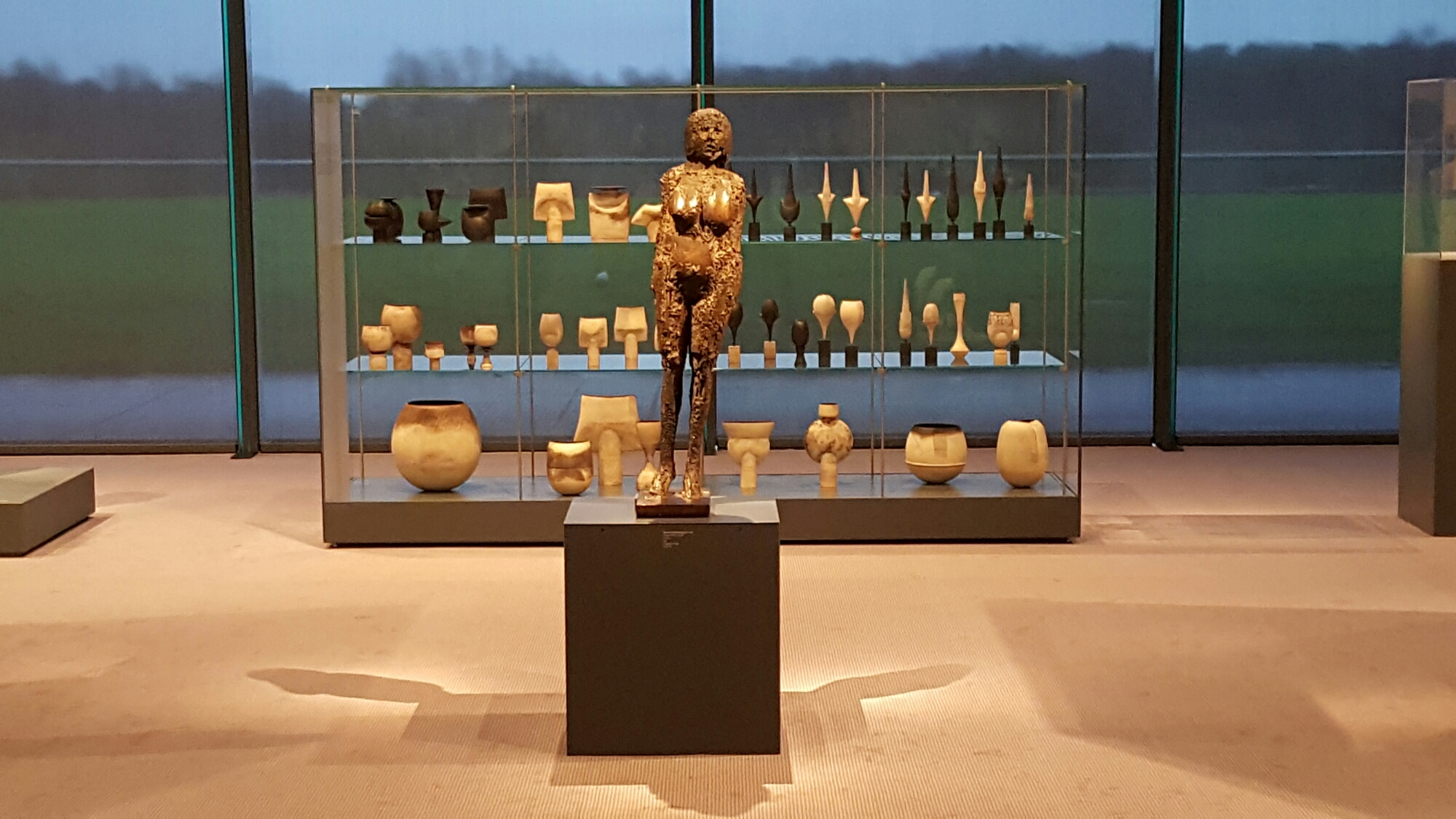
Mark Fisher has written a comment on my blog about the Sainsbury Centre to the effect that the displays reflect the beliefs of writers including Herbert Read and Ernst Gombrich (and most of all Roger Fry) that there is a universal language of the eye.   I’m sure it’s correct that Robert and Lisa Sainsbury who started collecting seriously in the 1930s are likely to have been influenced, if only at second hand, by the writings of Herbert Read, whose interests in ‘primitive’ art, modernist sculpture and ceramics (he had been an Assistant Keeper in the Ceramics Department at the V&A) mirrored their own.   The problem is that Read’s belief in a universal language of the eye has been discounted, if not discredited, by the next generation of art historians who have concentrated on the idea of specificity of context and on cultural content rather than aesthetics (sorry, this is a long answer to his comment).   I am posting some images of the display technique:-

image

image Continue reading →

Standard